Important Cultural Property
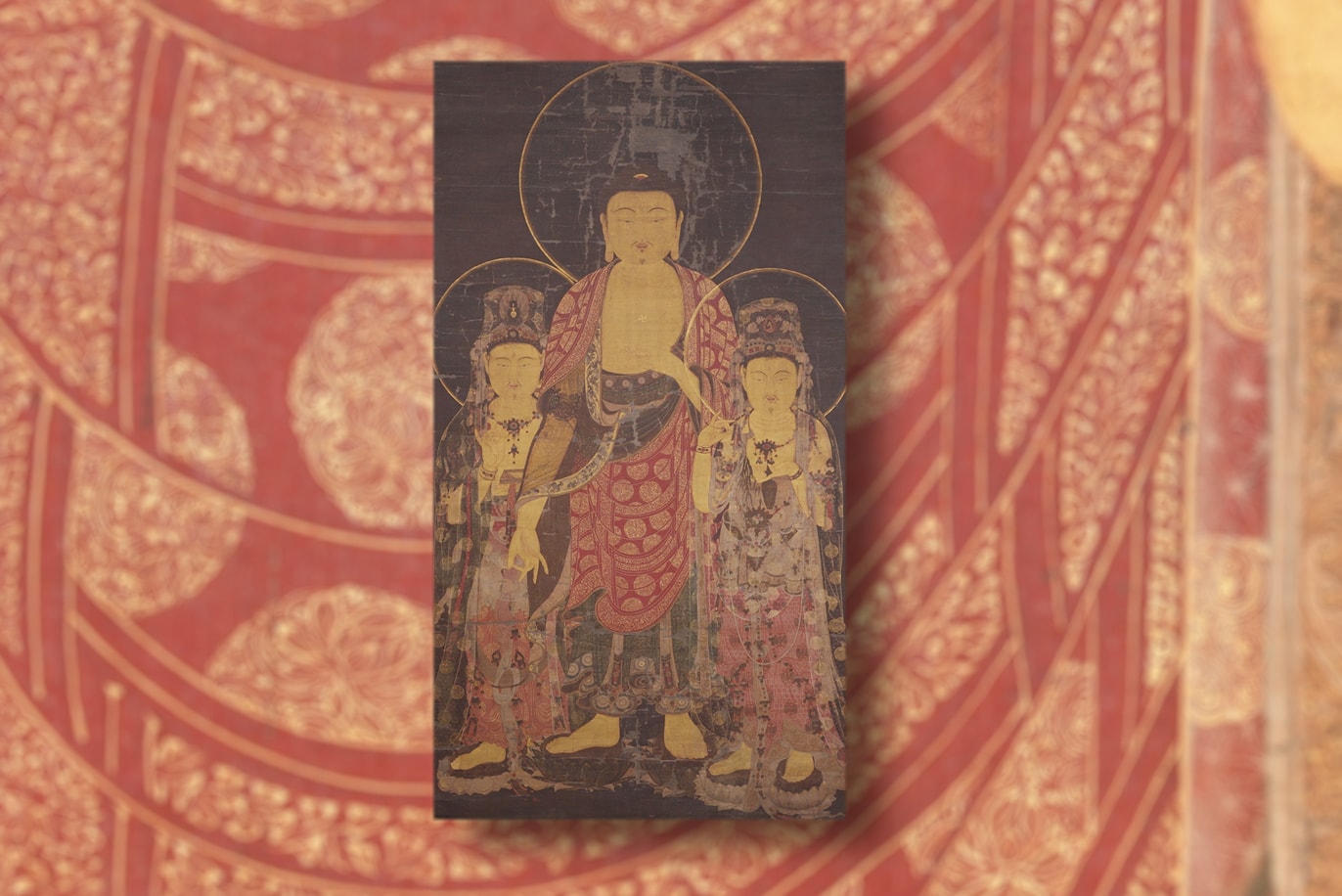
Amida Triad
Goryeo Period
1 piece
Color on silk
165.5 × 91.4 cm
This article can be read in about 2 minutes.
Form of prayer from another land
woven from light
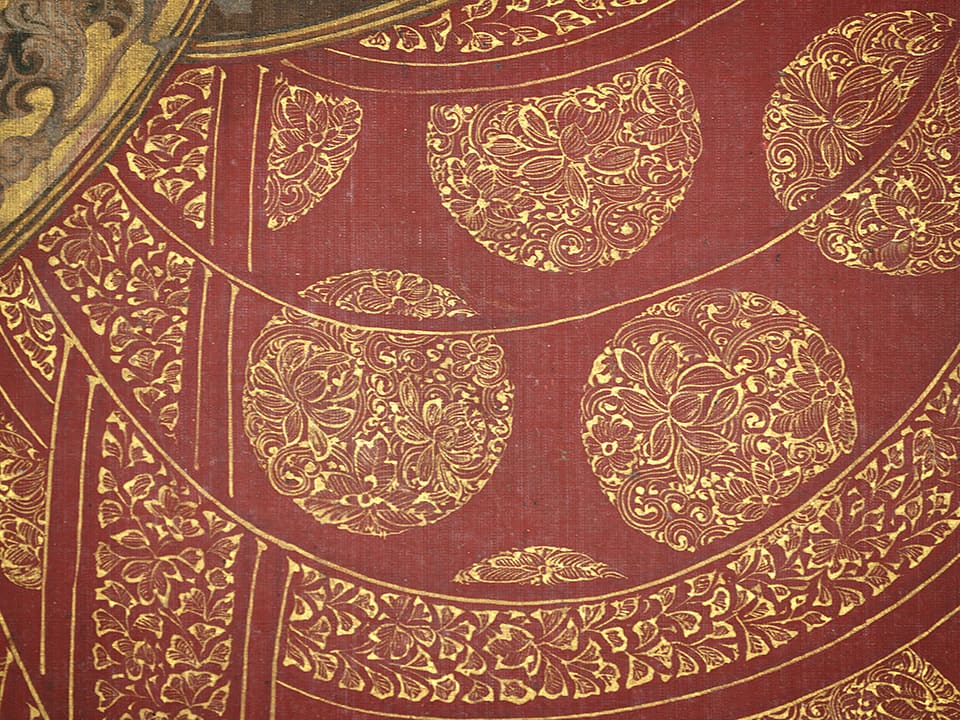
In this painting, the buddha Amida (Amitabha) is in the center and is flanked by the bodhisattva Kannon (Avalokiteshvara) on the right in the foreground and the bodhisattva Seishi (Mahasthamaprapta) on the left in the background. In this way, the three deities form an Amida triad. Amida wears a robe decorated with elegant circular patterns and his hands form the “welcoming mudra” (raigō-in), but the gestures of the left and right hands are reversed. Kannon holds a willow branch and a water vessel. Both attendant bodhisattvas are draped in richly decorated robes. All three figures have large halos and sit upon a lotus flower.
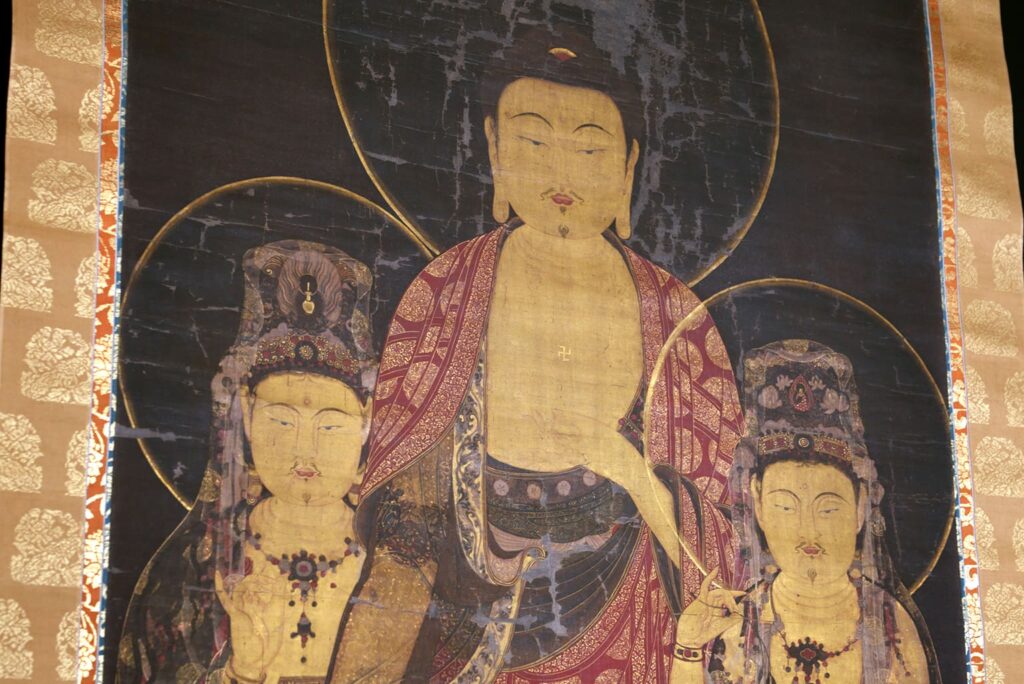
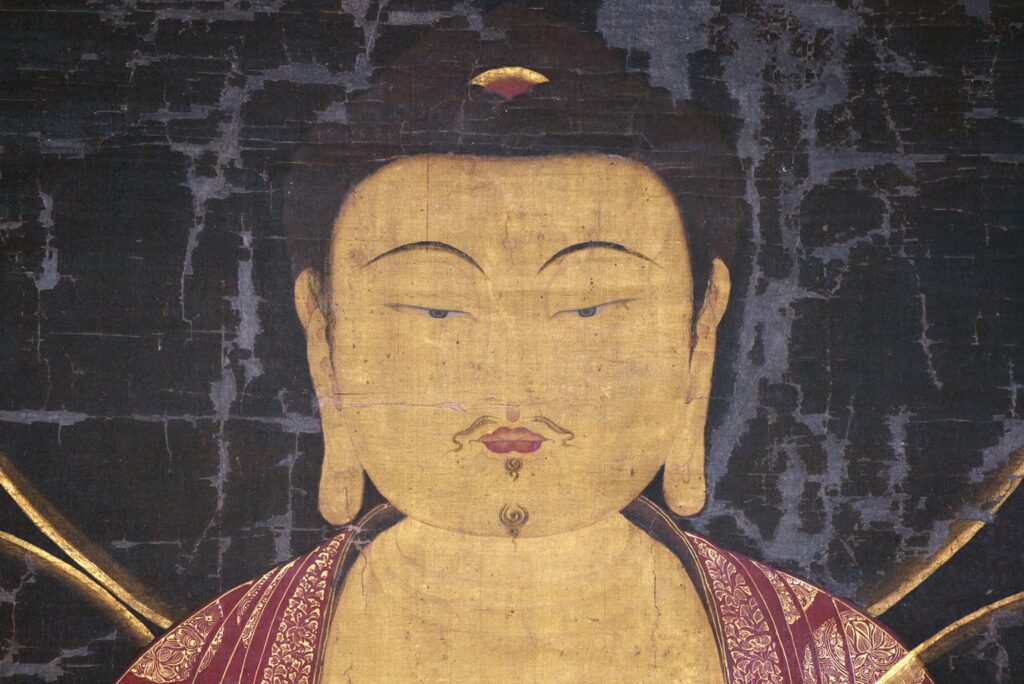
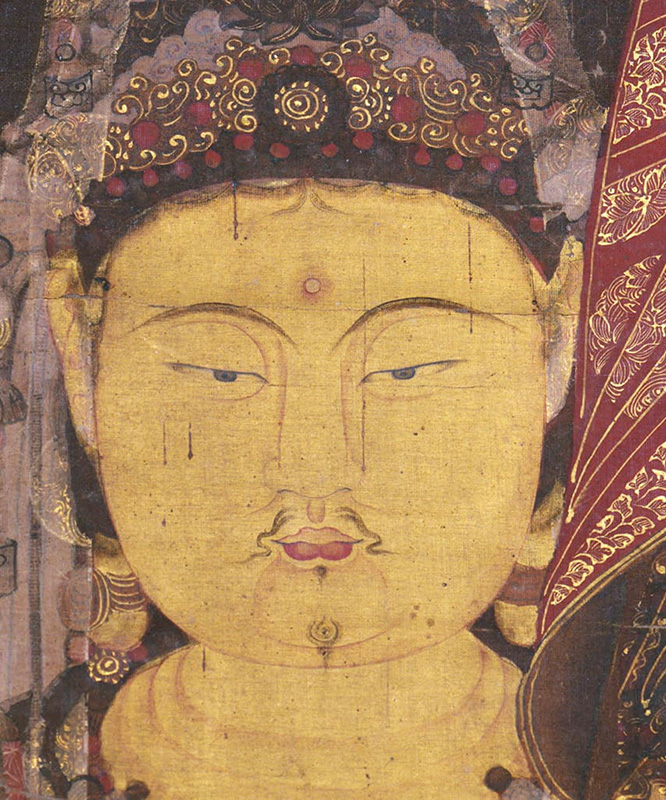
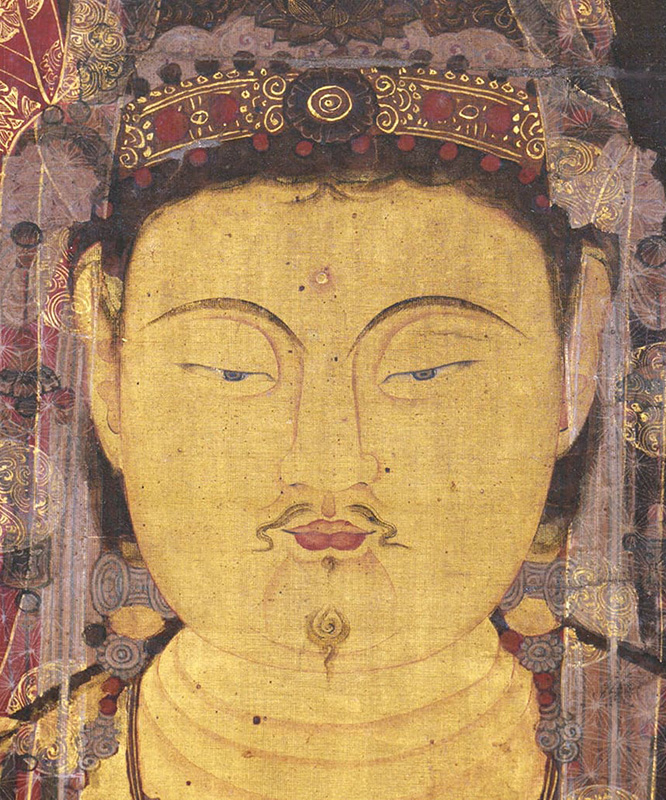
The composition, ornamentation, and coloring exemplify the artistic style of the Goryeo Kingdom in Korea during the twelfth and thirteenth centuries. Among the Buddhist paintings brought to Japan from abroad, this piece is a particularly valuable example. Its serene style and masterful technique make it a masterpiece.
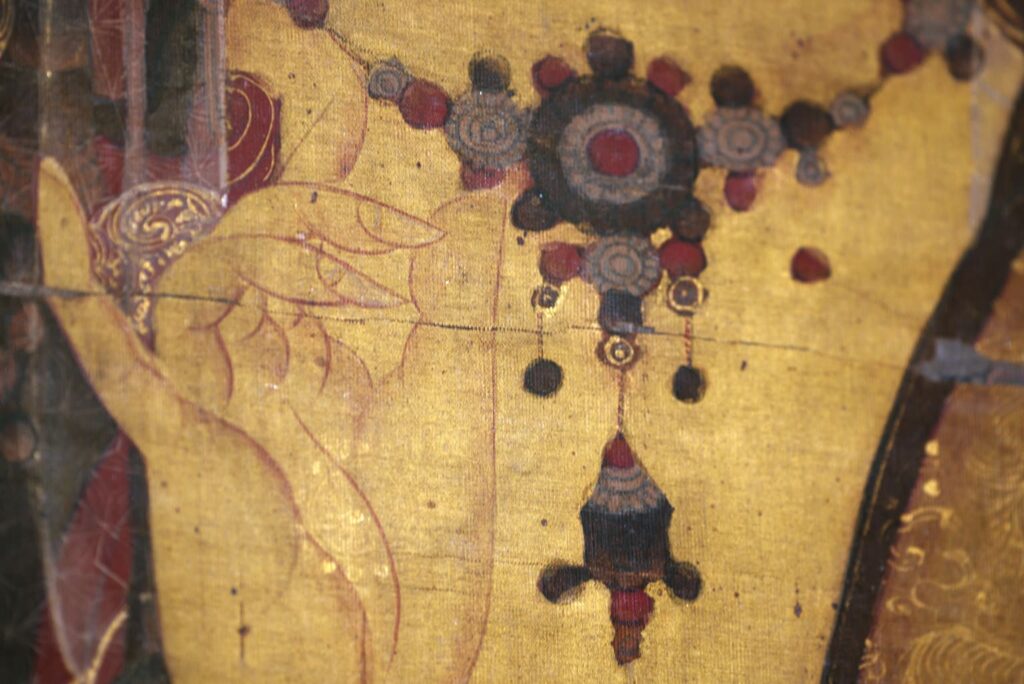
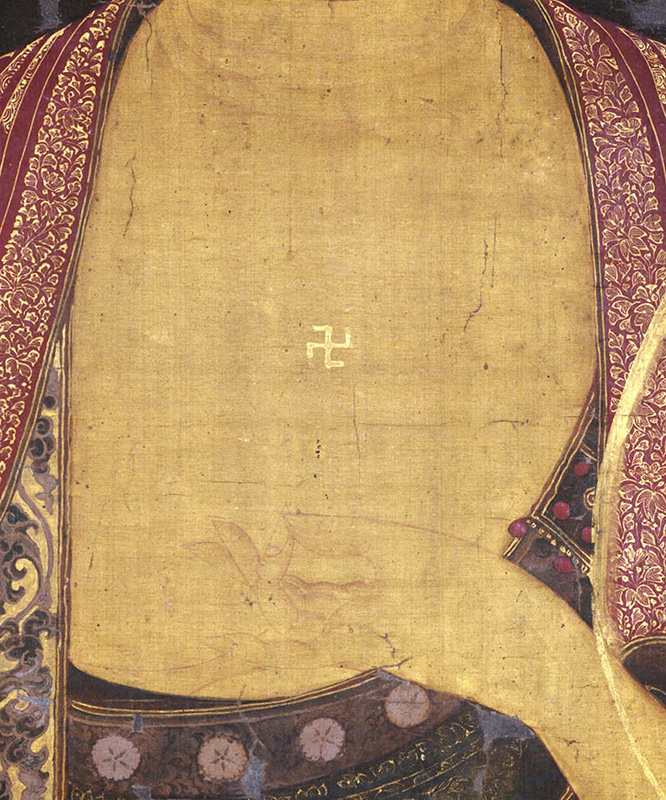
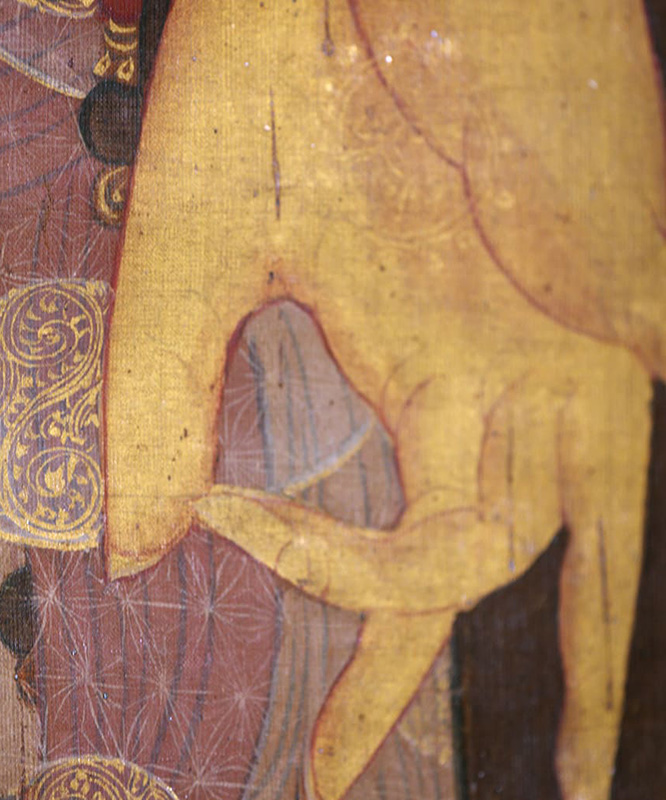
mandorla
A mandorla, the egg-shaped halo behind a Buddhist statue, represents the light shining out from behind bodhisattvas and the Buddha. It symbolizes the holiness and spiritual power of the Buddhist deities.
circular pattern
This is an ornamental design based on a circle. It symbolizes harmony and permanence. It is often seen in religious art, handicrafts, and architecture.
Goryeo
Goryeo was a kingdom that existed on the Korean Peninsula from 918 to 1392. Buddhism was its national religion. Although the Song and Yuan Dynasties of China exerted considerable influence on the kingdom, Goryeo maintained its own unique systems and culture.
Raigoin Mudra (Samadhi Mudra)
This is a mudra in which the hands are brought together. Amida Buddha forms this mudra when welcoming beings to the Pure Land. It is an important visual expression which symbolizes salvation and peace of mind.
Sanzon Triad
In this common Buddhist triad, a principal image occupies the center of a painting or group of statues with attendant images placed to the left and right.
Seishi (Mahasthamaprapta)
Seishi (Mahasthamaprapta) is the bodhisattva of wisdom in Mahayana Buddhism. With the light of wisdom, Seishi dispels the disillusionment of sentient beings and lights their way to paradise in the Pure Land.
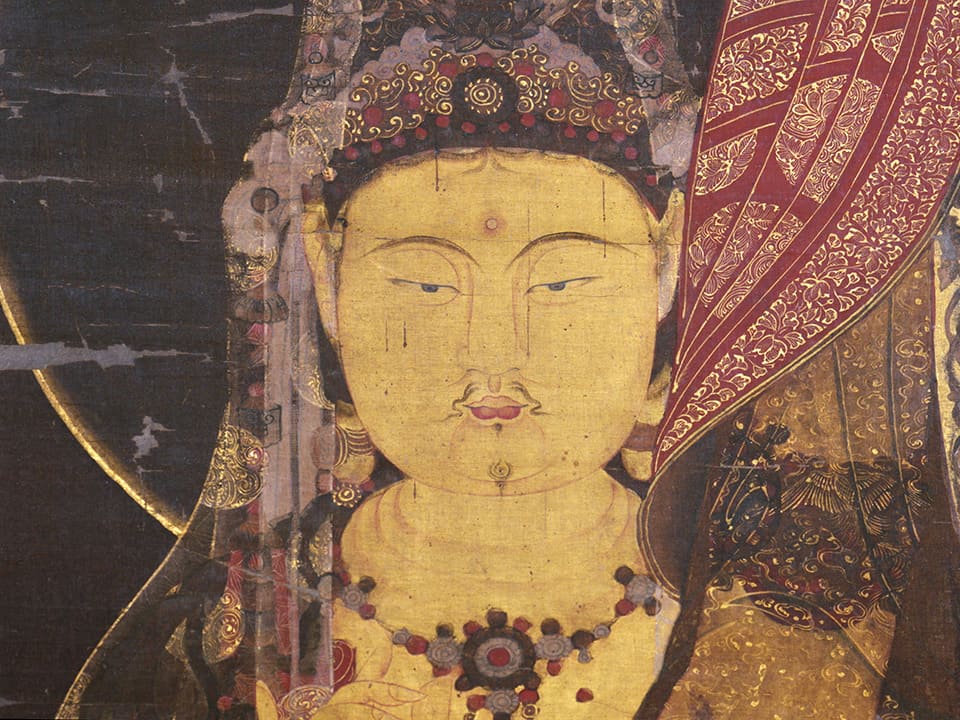
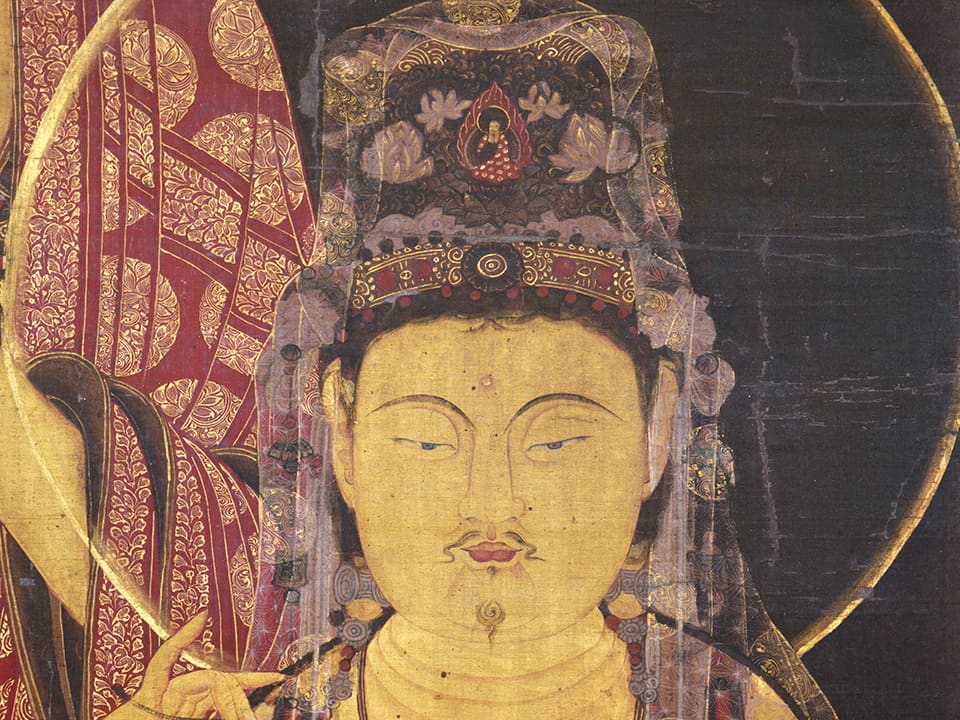
Kannon (Avalokitesvara)
Kannon (Sk. Avalokitesvara) is the bodhisattva of compassion in Mahayana Buddhism. Kannon is revered by a large number of followers, both young and old, across several Buddhist sects. Appearing in a variety of forms, Kannon exists to save all sentient beings.
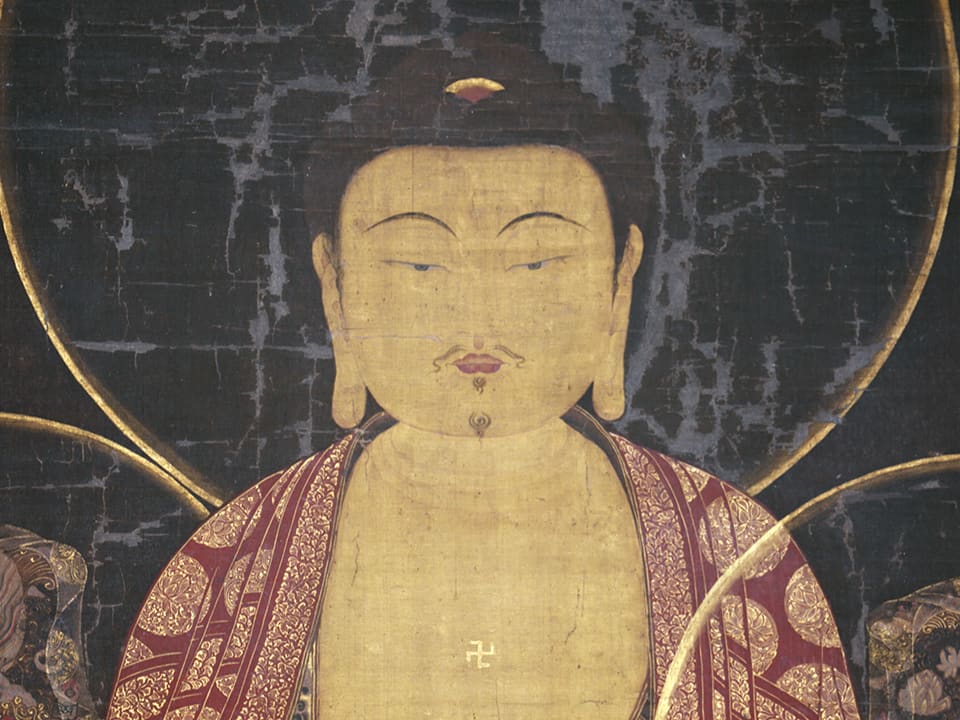
Amida Nyorai (Amitabha)
The lord of the Western Pure Land, dedicated to eradicating all forms of suffering and doubt, fulfilling the wishes of all beings.
MOVIE
Experience the video to get one step closer.
This video, accompanied by narration, introduces the charms of Amida Triad. Experience its charms even more deeply through the video.
Duration: (audio included)
Share on Social Media


Please respond to our questionnaire.
Estimated length: 30 seconds