Important Cultural Property
Paintings of the Immortal Poets
Kamakura period
3 scrolls
Light color on paper
Height: 14.5 cm; Width: 20.0 cm
This article can be read in about 2 minutes.
Kamakura elegance spun
from waka poetry and brushwork
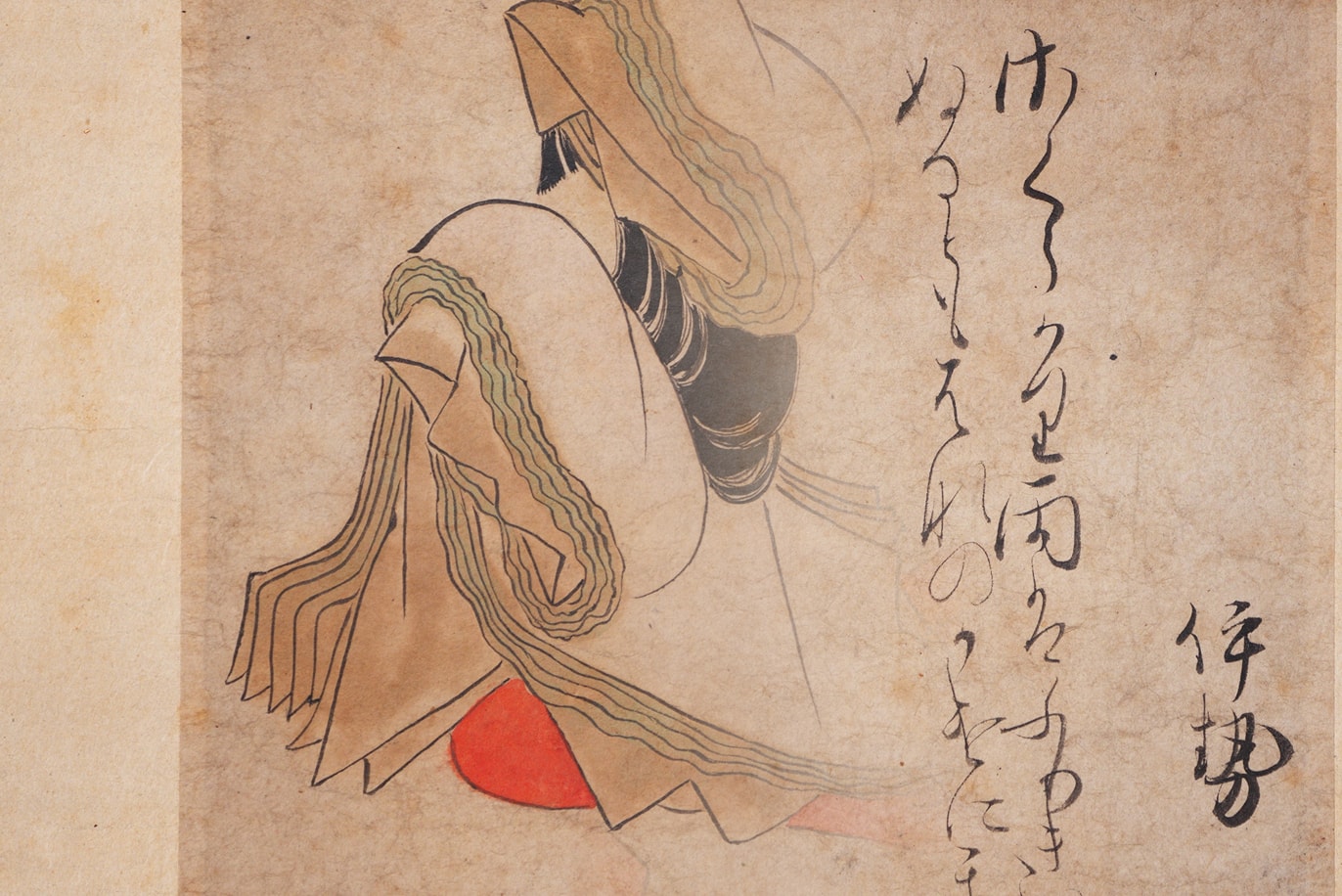
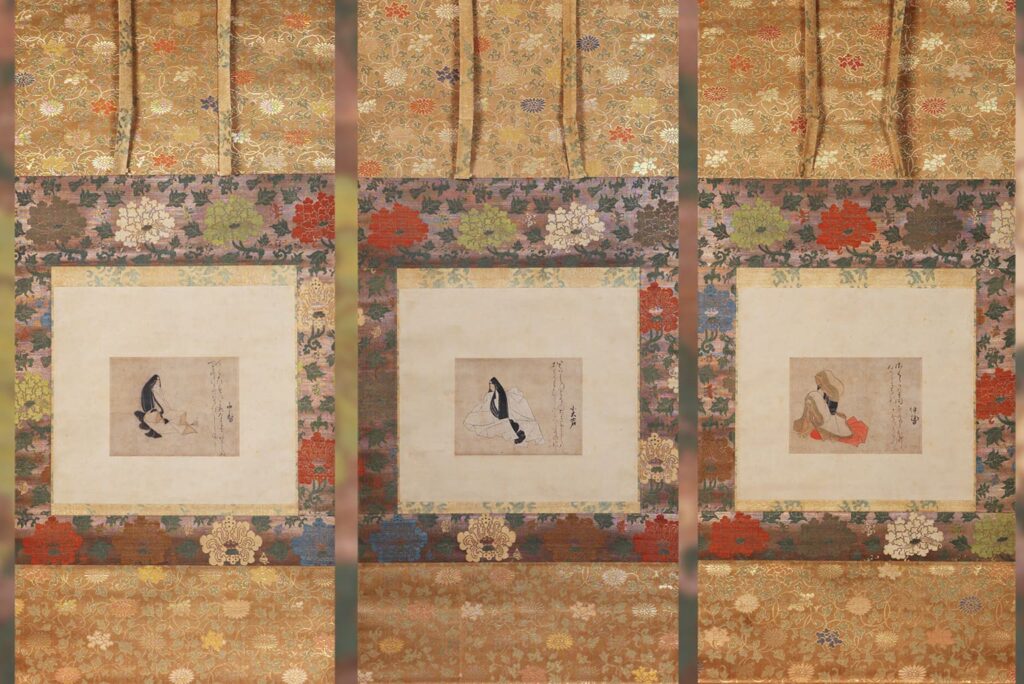
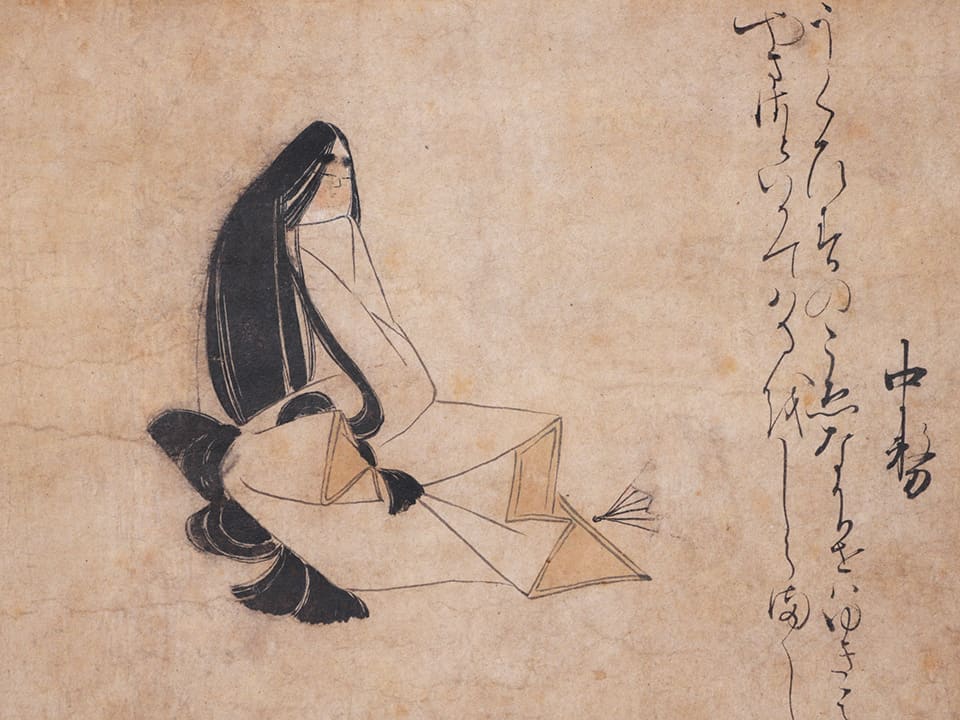
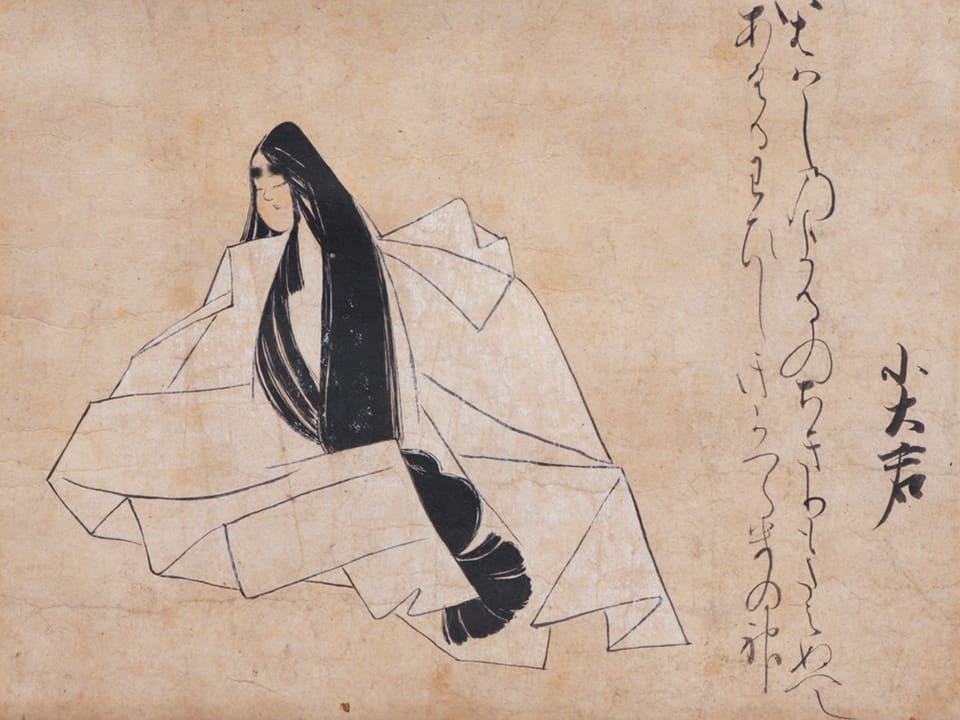
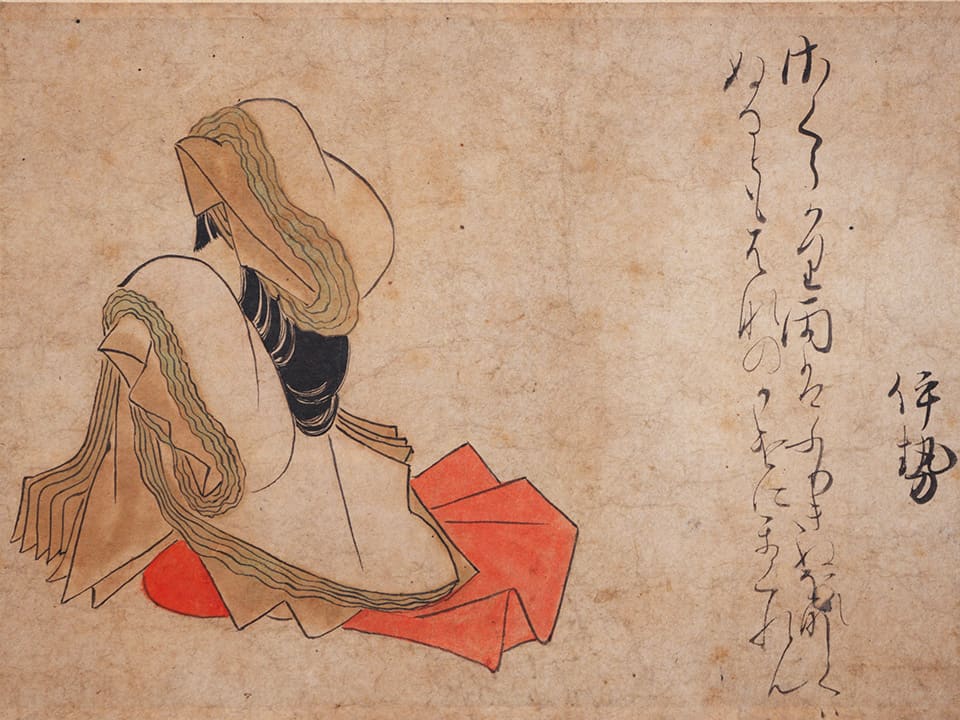
These paintings are part of a series called the Thirty-Six Immortals of Poetry, that was produced in the early Kamakura period (1185–1333). Senjuji Temple has preserved three scrolls from the set. They depict the renowned female poets Ise (872?–938?), Kodai no Kimi (dates unknown), and Nakatsukasa (912?–988?). Characterized by intricate, sophisticated brushwork, the paintings are rendered in delicate, graceful colors on small, shikishi-style panels with a waka poem from each poet inscribed on the right side.
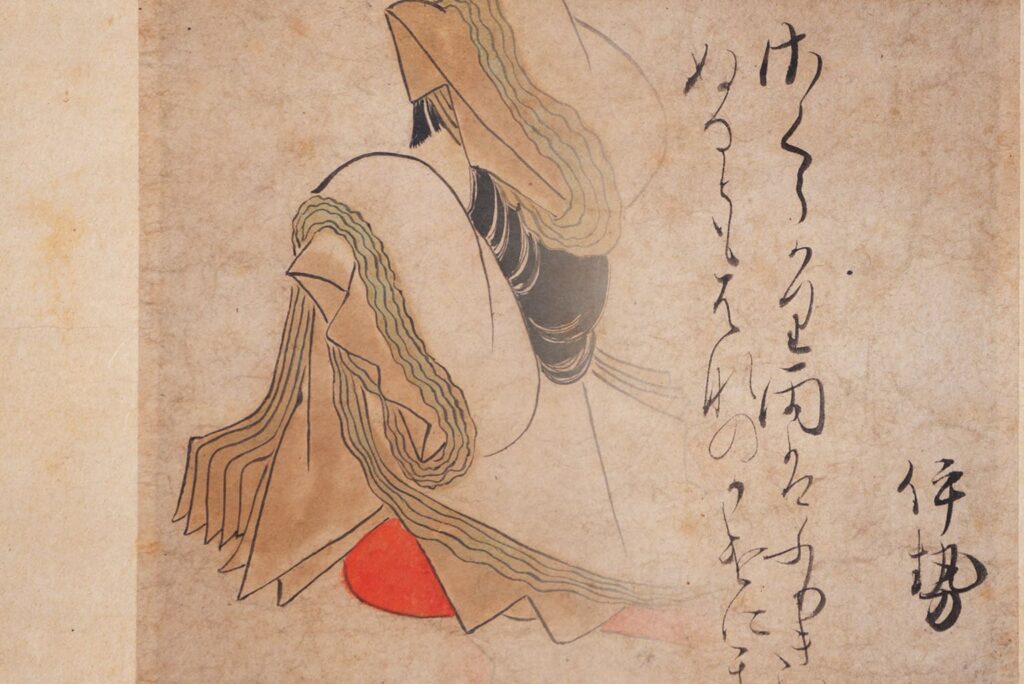
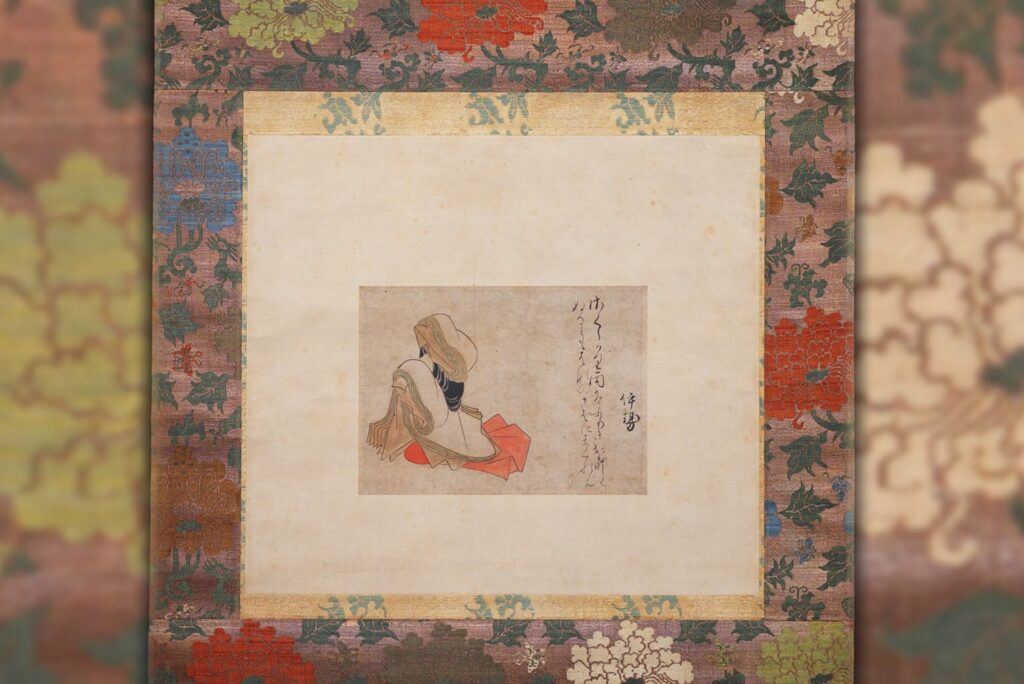
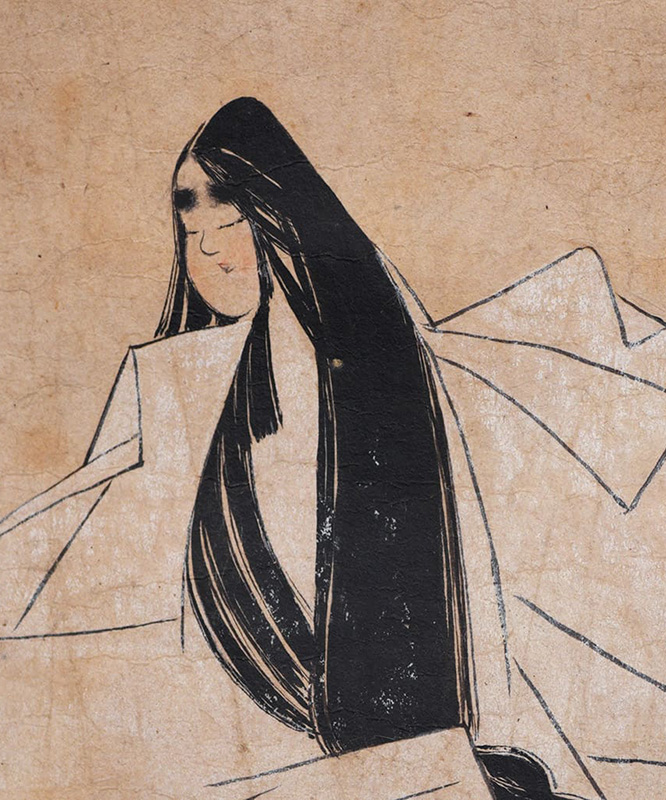
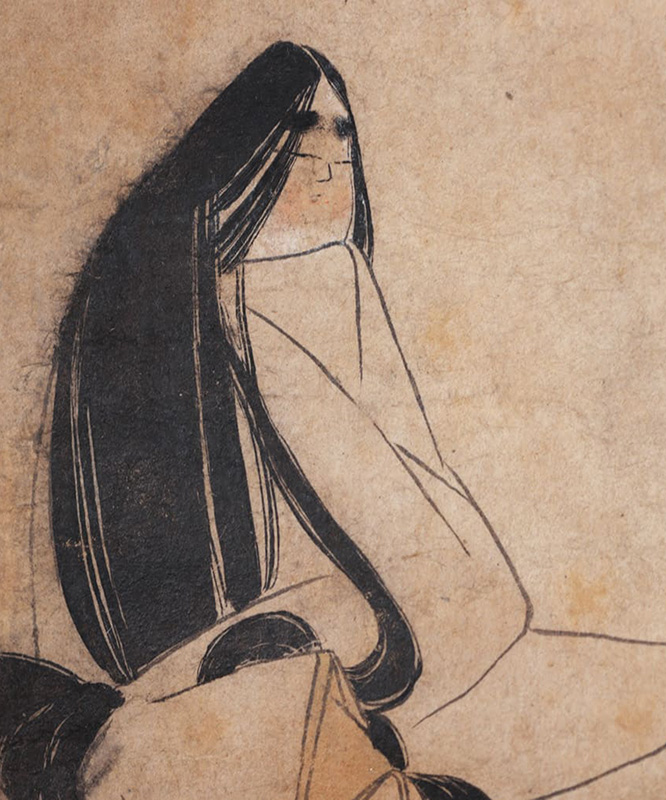
These particular paintings are traditionally attributed to Emperor Go-Toba (1180–1239) and are called “Go-Toba-In Bon” as his namesake.
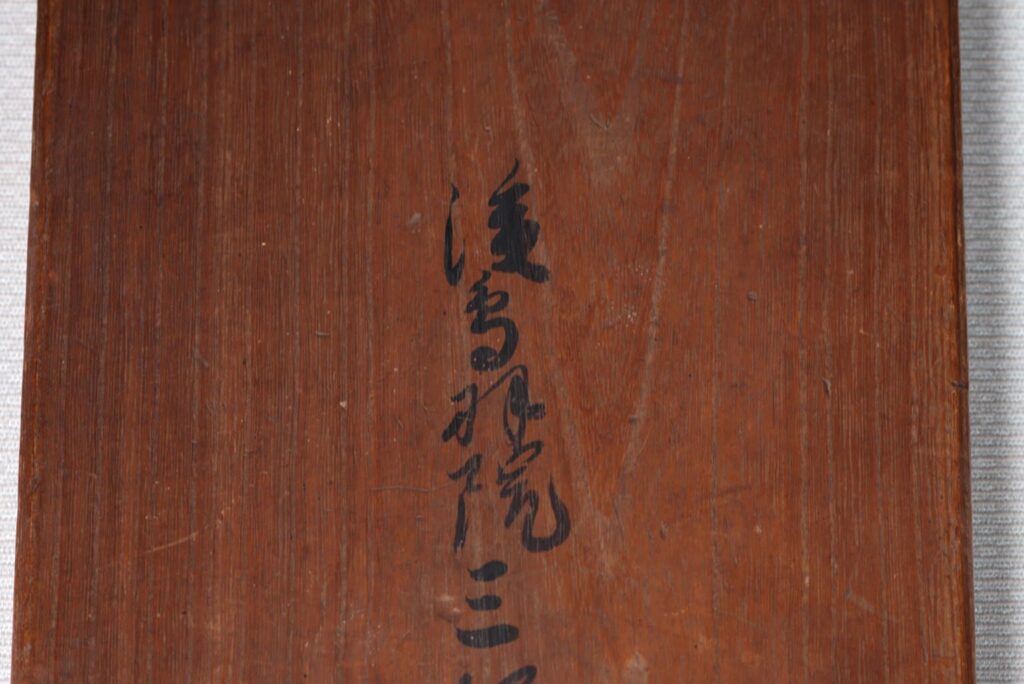
Of the original 36 paintings in the series, only 15 survive, making the Senjuji set especially significant. Celebrated for both their artistic excellence and their evocation of Kamakura-period waka culture, these female portraits are among the most admired pieces of the paintings that survive.
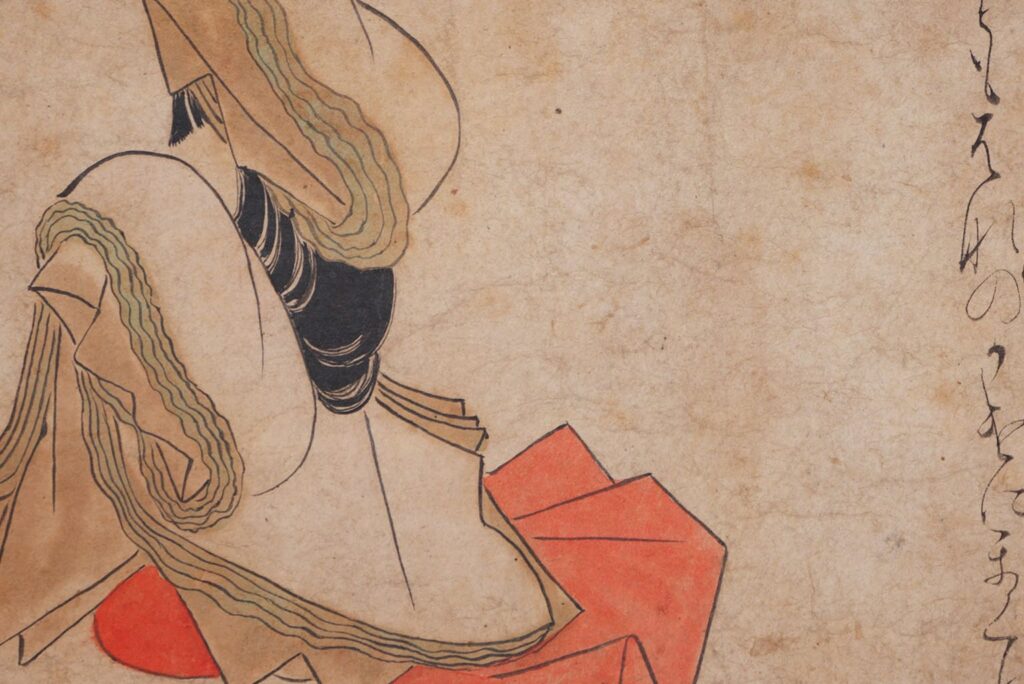
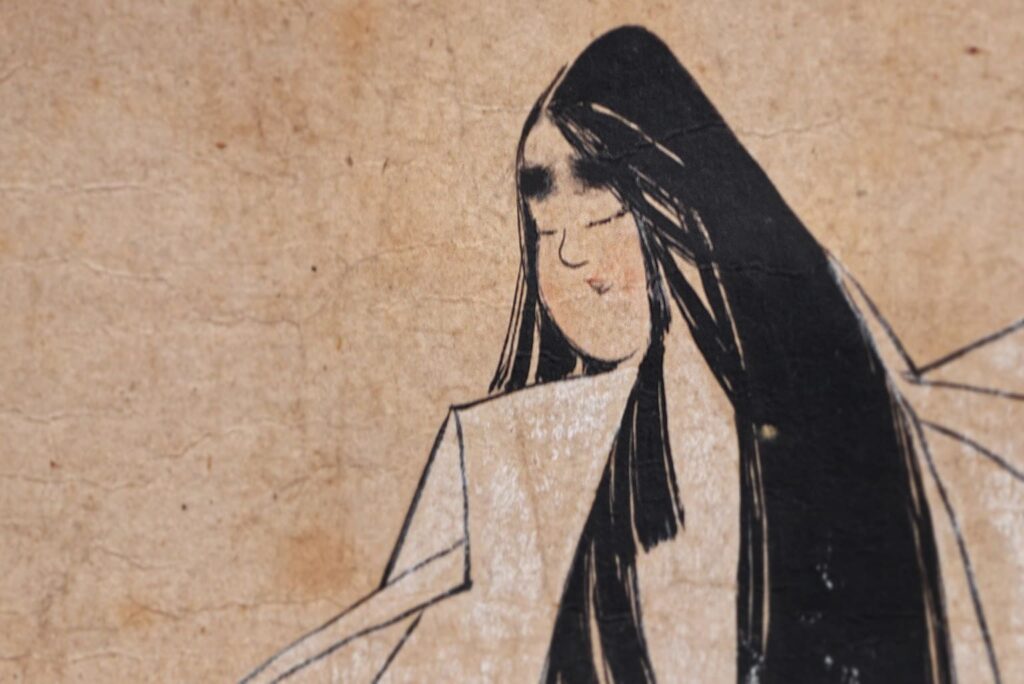
shinpitsu imperial writing
This is the honorific name for written works left behind by Japanese emperors.
Emperor Go-Toba
Born in 1180, during the Jisho era, he ruled as Emperor during the early Kamakura period. The fourth son of Emperor Takakura, he abdicated in 1198 and governed through cloistered rule. Excelling in the art of waka poetry, he commissioned the Shin Kokin Wakashu poetry anthology. In 1221, he issued an imperial edict to track down and assassinate Hojo Yoshitoki but failed and was exiled to the Oki Islands (an incident known as the Jokyu War or Jokyu Rebellion). He passed away there in 1239.
Nakatsukasa
Nakatsukasa (912–991) was a female poet active during the mid-Heian period (794–1185). She is one of the Thirty-Six Immortal Poets. She was the daughter of Ise (875?–938?) and Prince Atsuyoshi (887–930), the son of Emperor Uda (866–931).
Ko-Ōkimi
Ko-Ōkimi (dates unknown) was a female poet active during the mid-Heian period (794–1185). She is one of the Thirty-Six Immortal Poets. She is particularly well-known for composing the opening poem in the Goshūi wakashū poetry compilation.
Ise
Ise (875?–938?) was a female poet active during the late Heian period (794–1185). She is one of the Thirty-Six Immortal Poets. She was particularly revered as the representative female poet of classical waka poetry.
Thirty-Six Immortal Poets
This is the general name given to the 36 famous waka poets selected by Fujiwara no Kinto (966–1041), a court noble active during the mid-Heian period (794–1185).
Kamakura period
The name of the period that lasted for approximately 150 years from when Minamoto no Yoritomo founded the shogunate in Kamakura until Hojo Takatoki’s death in 1333.
MOVIE
Experience the video to get one step closer.
This video, accompanied by narration, introduces the charms of Paintings of the Immortal Poets. Experience its charms even more deeply through the video.
Duration: (audio included)
Share on Social Media


Please respond to our questionnaire.
Estimated length: 30 seconds