Important Cultural Property
Shishunkan
1878
Length: 18.8 m
Width: 14.2 m
Single Tier
hip-and-gable style (irimoya-zukuri)
Standing-seam copper-sheet roofing
Latrine annex on the south side
hip-and-gable style (irimoya-zukuri)
sangawara roof tile
This article can be read in about 2 minutes.
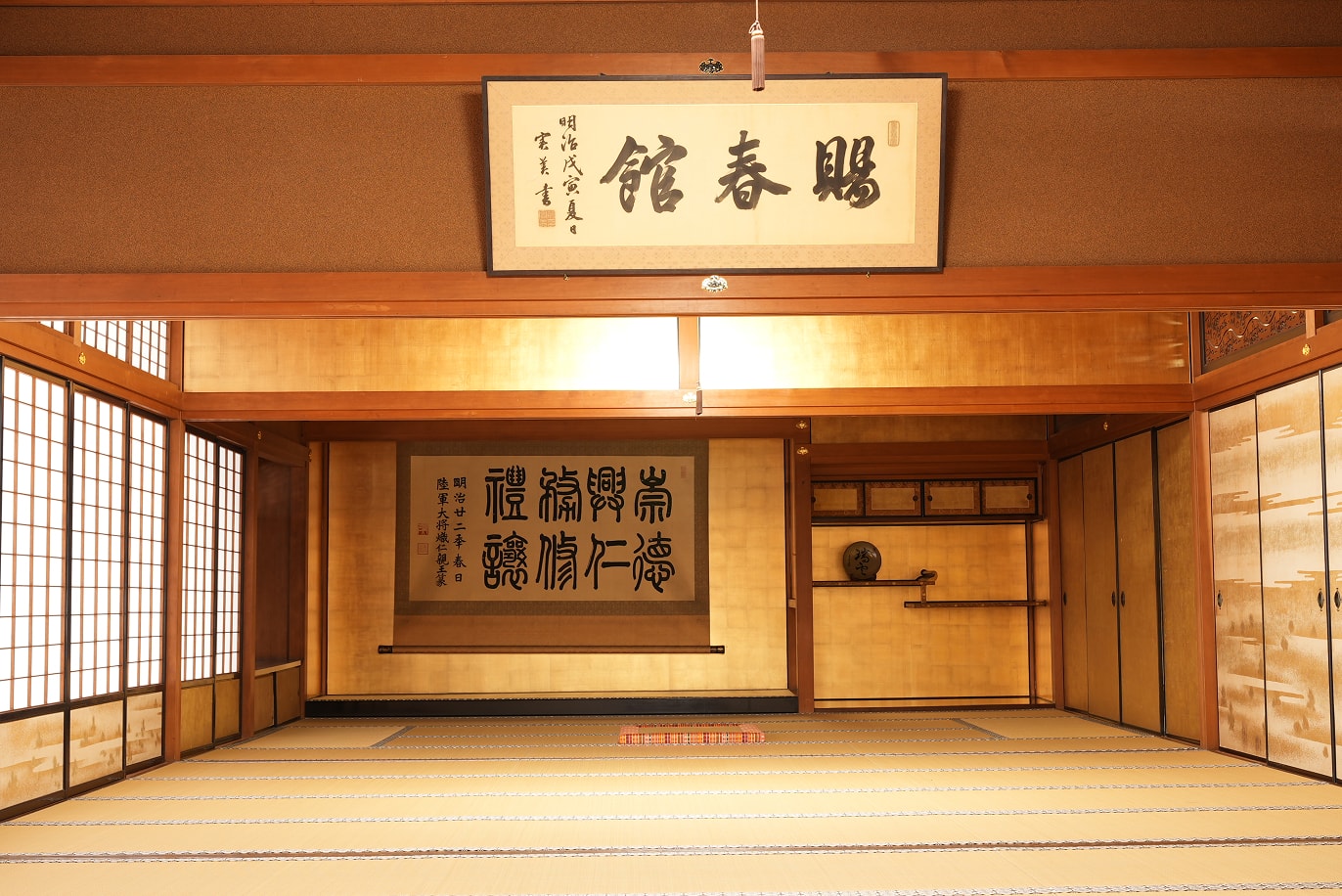
A room of dignity and grace
welcoming honored guests
The Shishunkan is a reception hall built in 1878 to receive important guests visiting Senjuji. Today, the hall is used in appointment ceremonies for new abbots. The name is celebratory and means “the pleasures of spring (or youth).”
The Meiji Emperor (1852–1912) stayed in the Shishunkan when he visited Senjuji in July of 1880. He slept in a small room to the east of the main room. The rings used for securing mosquito netting over his futon during his visit are still affixed to the walls. To the west of the main room is a toilet, and an interior corridor runs around the perimeter of the hall.
The main room of the hall contains a toko no ma, a decorative alcove usually adorned with an artistic scroll or flower arrangement. The toko no ma is covered in gold leaf, and the rest of the room’s decorations also use gold liberally. The designs on the sliding fusuma doors are relatively simple in the outermost section of the room, becoming more intricate and lavish towards the interior of the hall. In the innermost area, the doors and ceiling are completely covered with gold. This space, the kami no ma, was used for audiences with the emperor during his visit.
The Shishunkan is not open to the public.
Prince Arisugawa Taruhito
Prince Arisugawa Taruhito (1835–1895) was a member of the imperial family and a military officer. He was active in the Meiji Restoration, served as Chief Minister in the new imperial government, and helped establish the Imperial Japanese Army.
Emperor Meiji
Emperor Meiji (1852–1912) was the 122nd emperor of Japan and reigned from 1867 to 1912. Spurring rapid modernization with the Meiji Restoration, he became a symbol of modern Japan. He promoted systemic reforms such as promulgating the Japanese Constitution of 1889 and establishing the Imperial Diet.
Sanjō Sanetomi
Sanjō Sanetomi (1837–1891) was a court noble and politician. He was active during the Meiji Restoration and was a leader of the new imperial government as the Chancellor of State (Daijō-daijin). He made efforts to reform the court nobility.
secchin toilet
This was a toilet found in temples and samurai houses.
Share on Social Media


Please respond to our questionnaire.
Estimated length: 30 seconds