Important Cultural Property
Otaimensho
1785 (the end of the Edo Period)
Length: 24.5 m
Width: 19.5 m
Single Tier
hip-and-gable style (irimoya-zukuri)
tsumairi entrance
tiled roof (hongawarabuki)
This article can be read in about 2 minutes.
Space enveloped in
magnificent wall-and-screen paintings
The Otaimensho is a hall for encounters between the abbot of Senjuji and the lay community. It was used regularly for such meetings until the early twentieth century, but these events are now held only once a year. It has also been used for tea gatherings and as a set for films. The original building was destroyed by fire in 1783, but it was rebuilt in 1786.
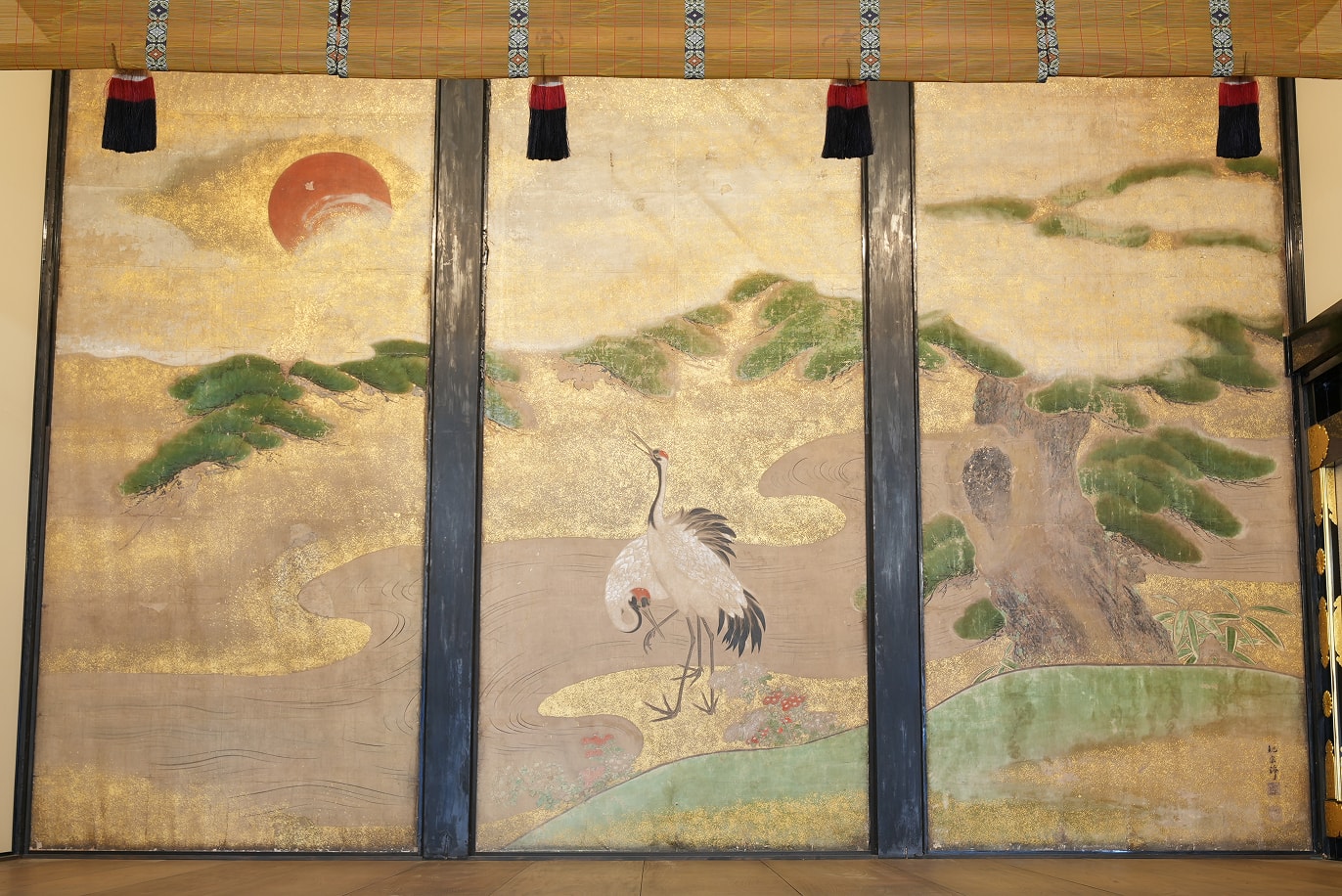
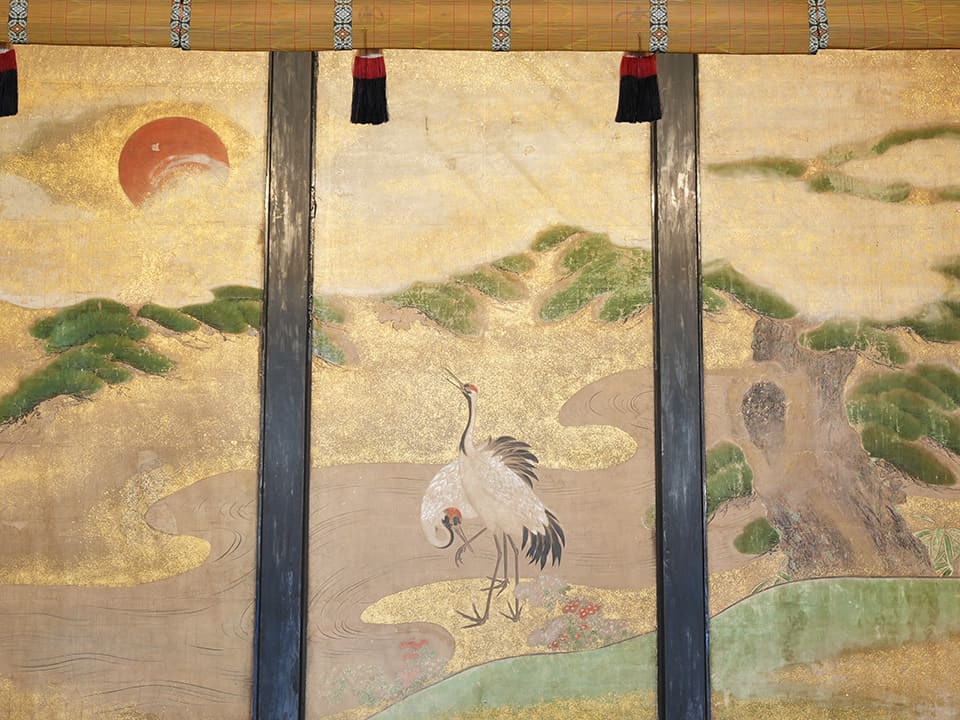
The large hall can be partitioned into smaller rooms using sliding doors. The rooms are arranged in three rows of five rooms each. The further back in the hall, the more prestigious. The focal point and highest-ranking area of the three main sections is the center-back room, which has a raised wooden floor and a large painting of a pair of red-crowned cranes under a snowy pine. The innermost room on the west side of the hall contains a Buddhist altar where a thirteenth-century statue of Amida Nyorai is enshrined. The room at the far end of the east side is not an exalted space; rather it is a private room for the head abbot of Senjuji to use before stepping into the room in front of the painting of the cranes and pine tree. Its sliding panels are usually closed.
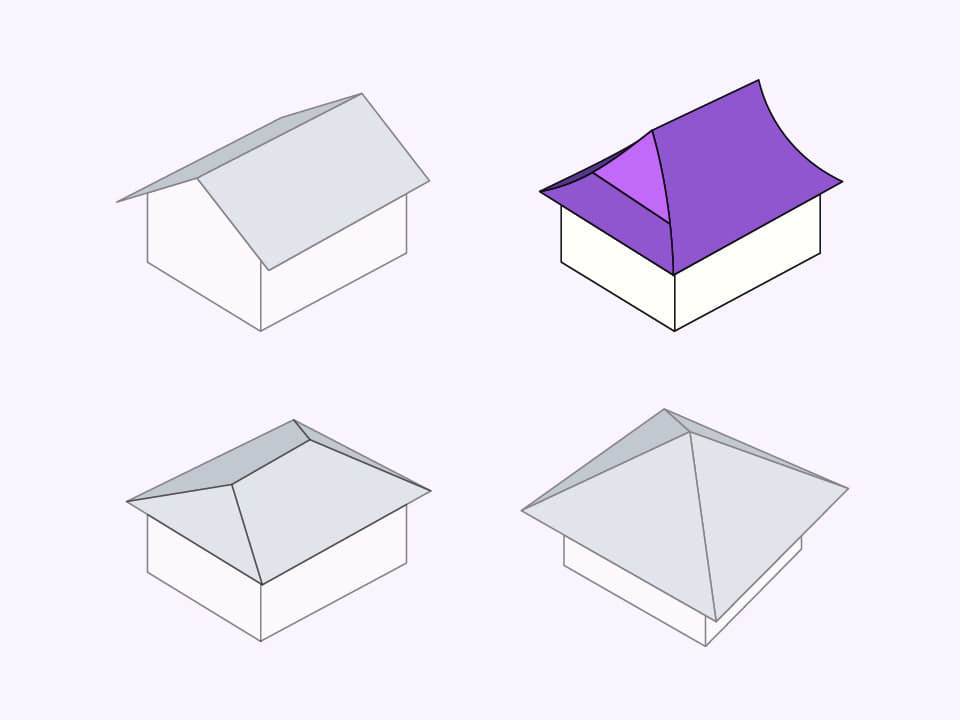
The Otaimensho is connected to surrounding buildings by a covered passage. It has a tiled, hip-and-gable roof with a curved gable over the entrance.
The Otaimensho is not open to the public.
Gyōshū Shōnin
Gyōshū (1582–1666) was the fourteenth head priest of Senjuji Temple, the head temple of the Jōdo Shinshū Takada school. After transferring the position of head priest to his son Gyōchō Shōnin, several temple buildings were lost in the Great Ishinden Fire. Gyōshū reassumed his position as head priest and did his utmost to rebuild the Mieidō Hall, which had been lost in the disaster.
Shinne Shōnin
Shinne (1434–1512) was the tenth head priest of Senjuji Temple, a Jōdo Shinshū Takada school temple. He was a central figure in Senjuji Temple’s resurgence and created the opportunity to move the temple from Takada in Tochigi Prefecture to Ishinden in Mie Prefecture.
wall painting of large pine tree and red-crowned crane
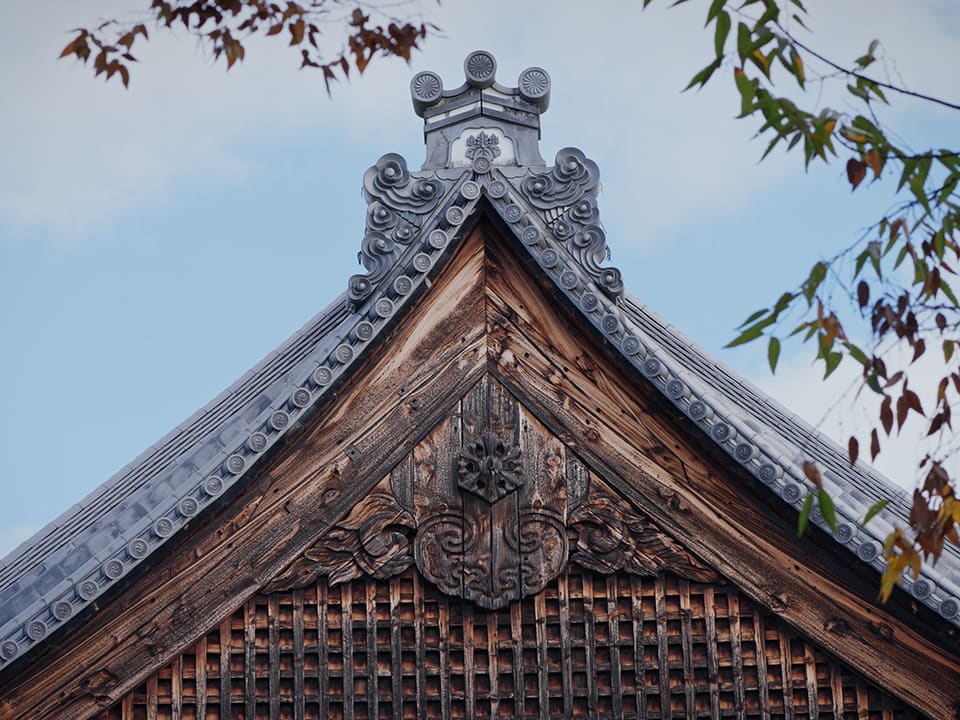
tsumairi entrance
This is a structural design in which the main entrance of a building is placed on the gabled side.
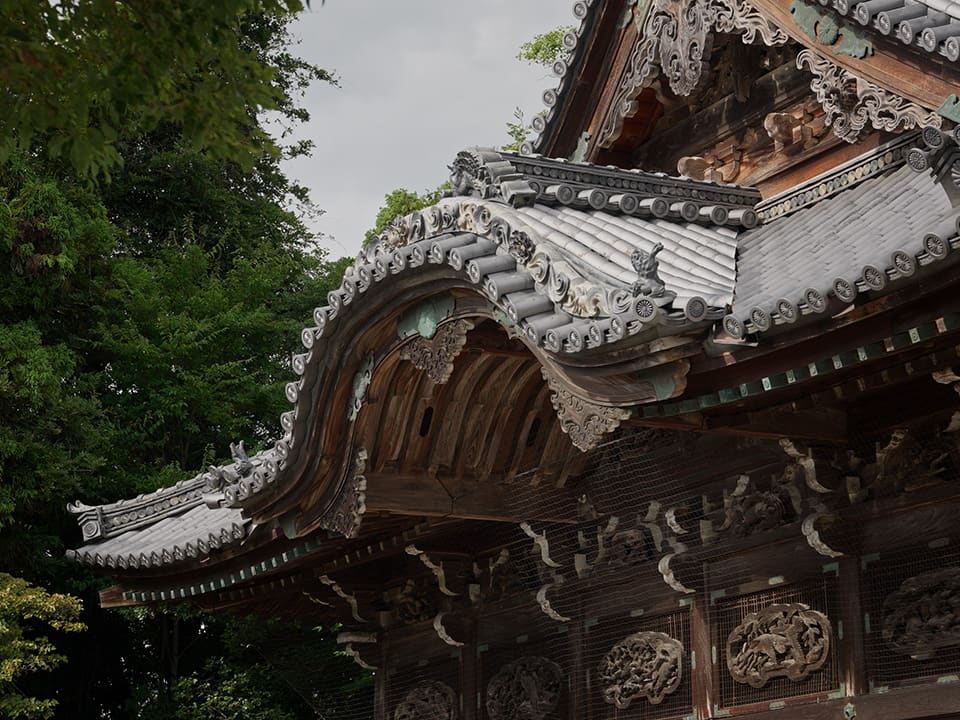
karahafu undulating bargeboard
A unique style of roof with a gable that flows from the top center with gentle curves on each side.
hip-and-gable style (irimoya-zukuri)
A gable (kirizuma-zukuri) is right above the core and a hipped roof are attached to the four sides on the lower part of the gable. (hip-and-gable roof construction)
Share on Social Media


Please respond to our questionnaire.
Estimated length: 30 seconds