Important Cultural Property
Tsūten Bridge
1800 (the end of the Edo Period)
Nine-bay long structure
One-Bay Transverse Span
Single Tier
Karahafu-style gable
tiled roof (hongawarabuki)
This article can be read in about 2 minutes.
Bridge of faith
linking two sacred halls
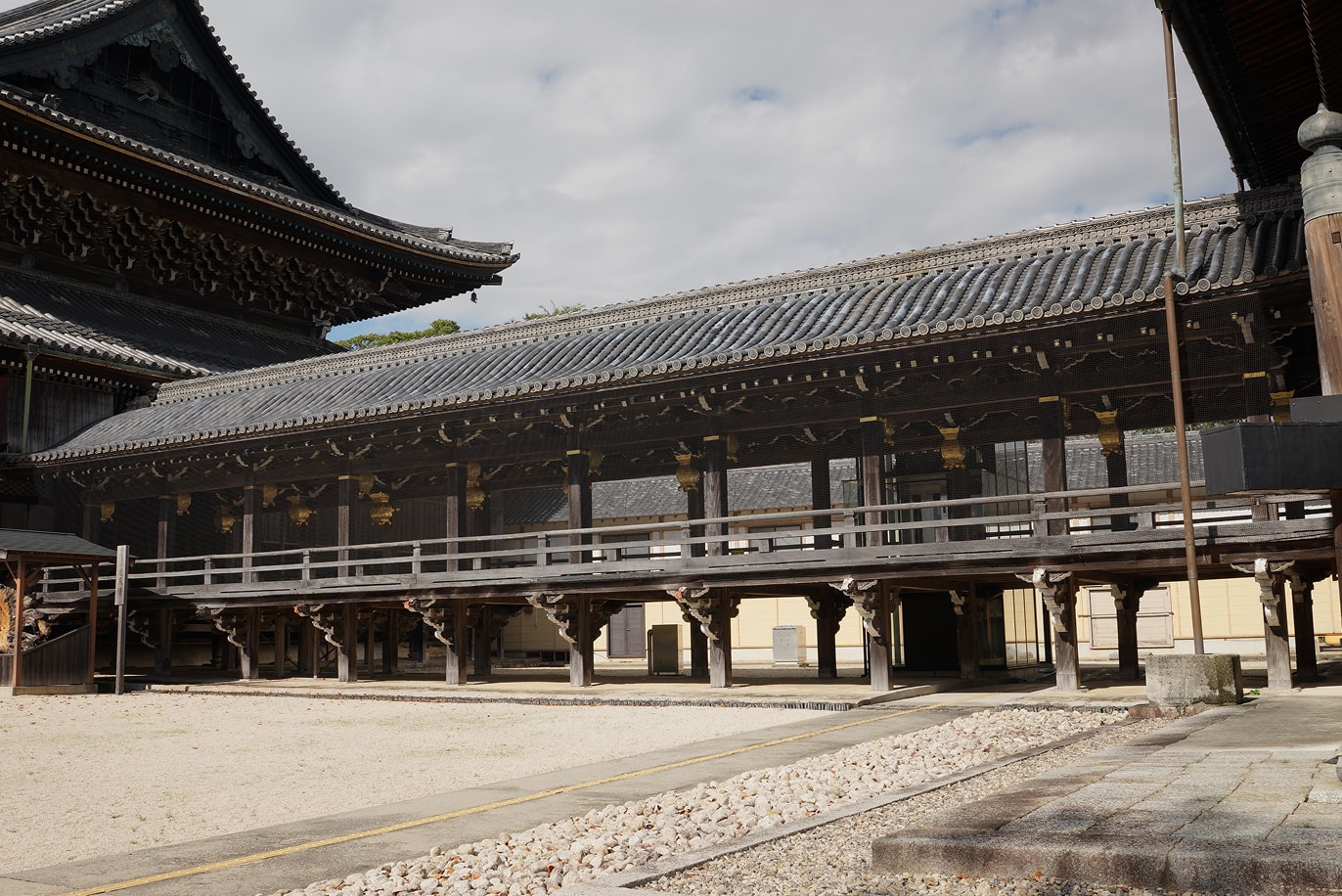
The Tsūten Bridge is an elevated corridor that connects the Mieidō and the Nyoraidō. Built in 1802, it is nearly 32 meters in length and, like the Karamon Gate, is made of zelkova wood. The bridge is completely open on the sides and lit by golden lanterns engraved with the names of the people who donated them.
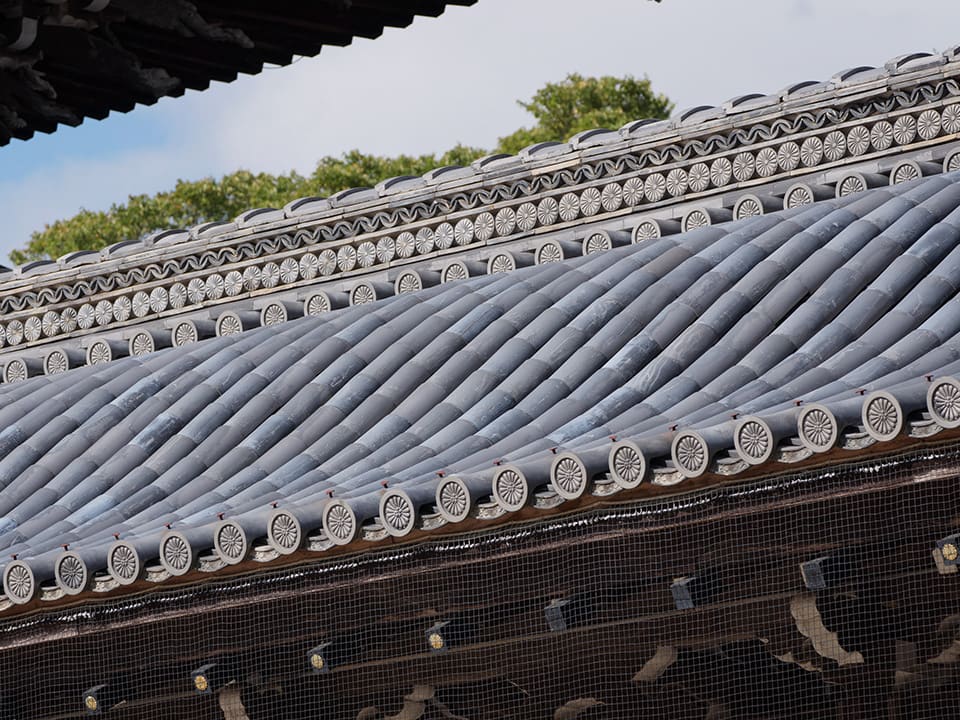
The tiled roof gently curves from the center ridge to the eaves in a style called terimukuri, with a curved gable at each end. The gable echoes the shape of the Karamon Gate and the entrance to the Nyoraidō. These curved portions are notoriously difficult to create and indicate the wealth and prestige of the temple during the Edo period (1603–1867).
The bridge and the Nyoraidō were restored during the 1980s; the bridge was completely disassembled and put back together, and any broken or rotting components were carefully cut out and replaced.
teri-mukuri sloping roof style
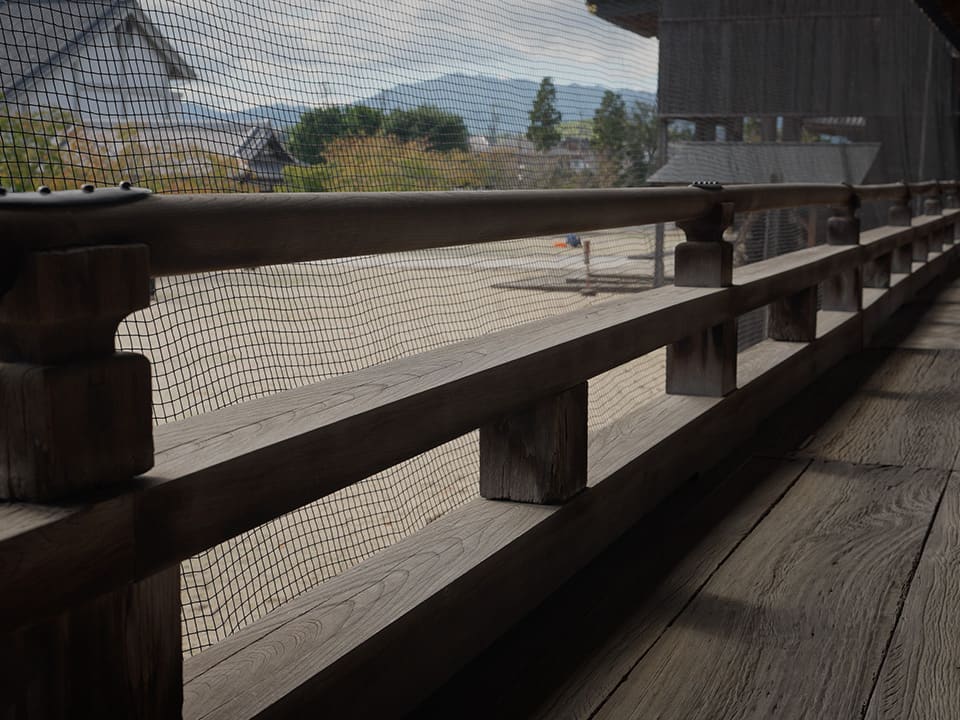
koran handrail
For fall protection, handrails are attached to the outer edge of the corridor that encircles the floor.
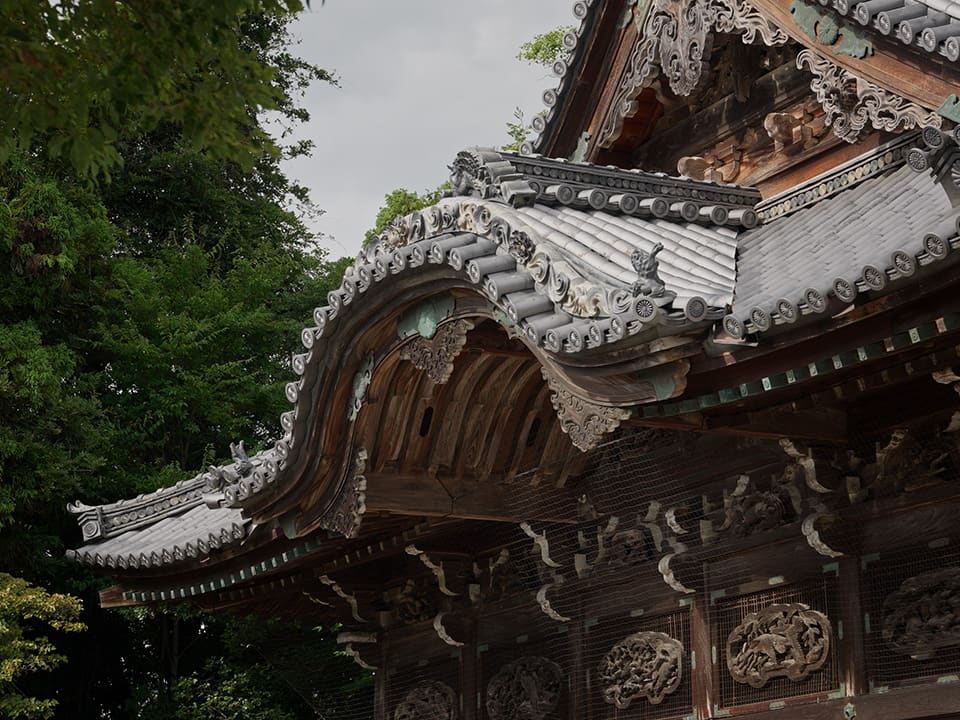
karahafu undulating bargeboard
A unique style of roof with a gable that flows from the top center with gentle curves on each side.
Share on Social Media


Please respond to our questionnaire.
Estimated length: 30 seconds