Important Cultural Property
Gobyō Karamon Gate and Fence
1830-1867 (the end of the Edo Period)
Mausoleum Karamon gate
Four-legged Hirakaramon gate
cypress bark
14 bays on the east side
12 bays on the west side
With a side wicket gate
cypress bark
This article can be read in about 2 minutes.
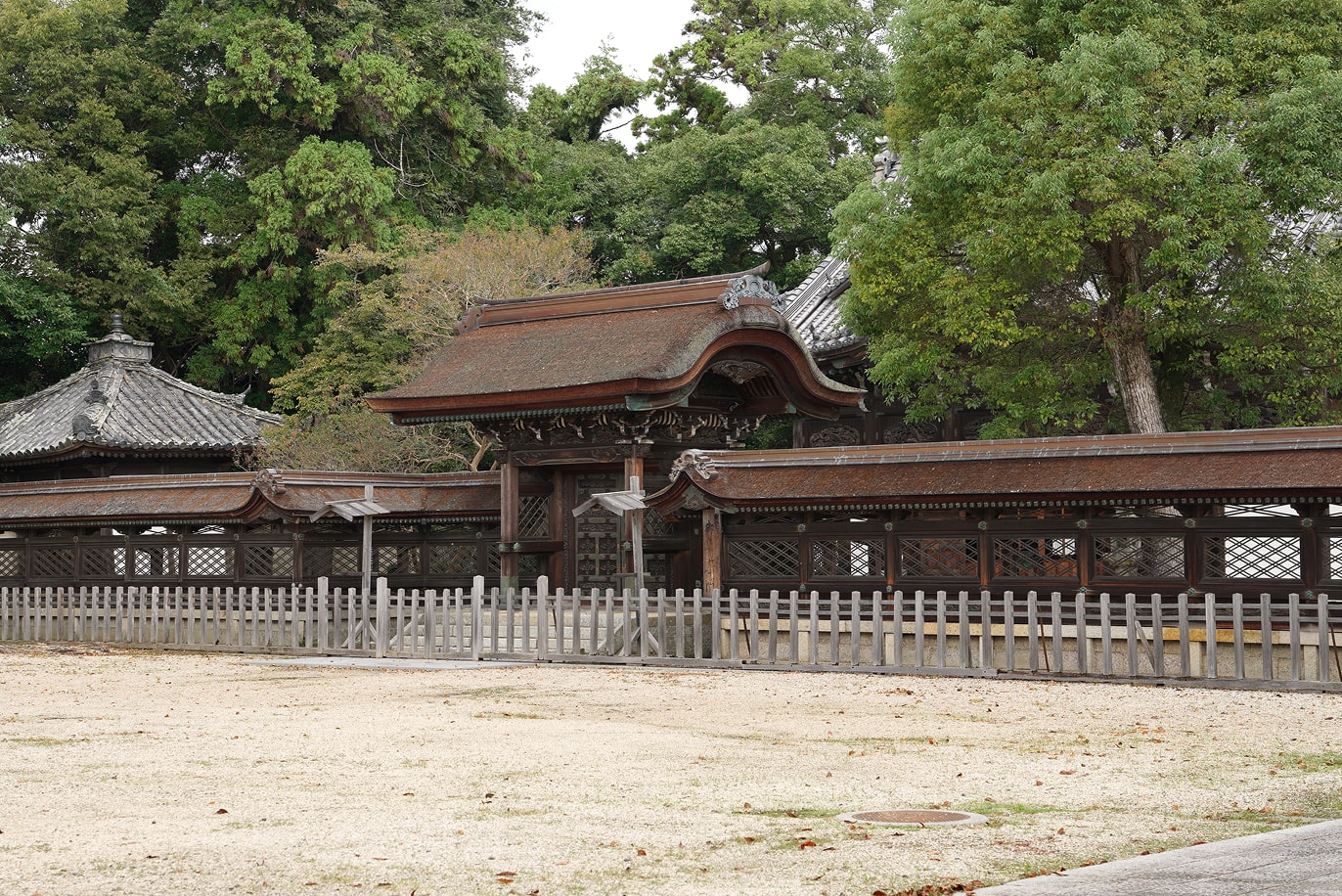
A splendid gate
safeguarding the mausoleum
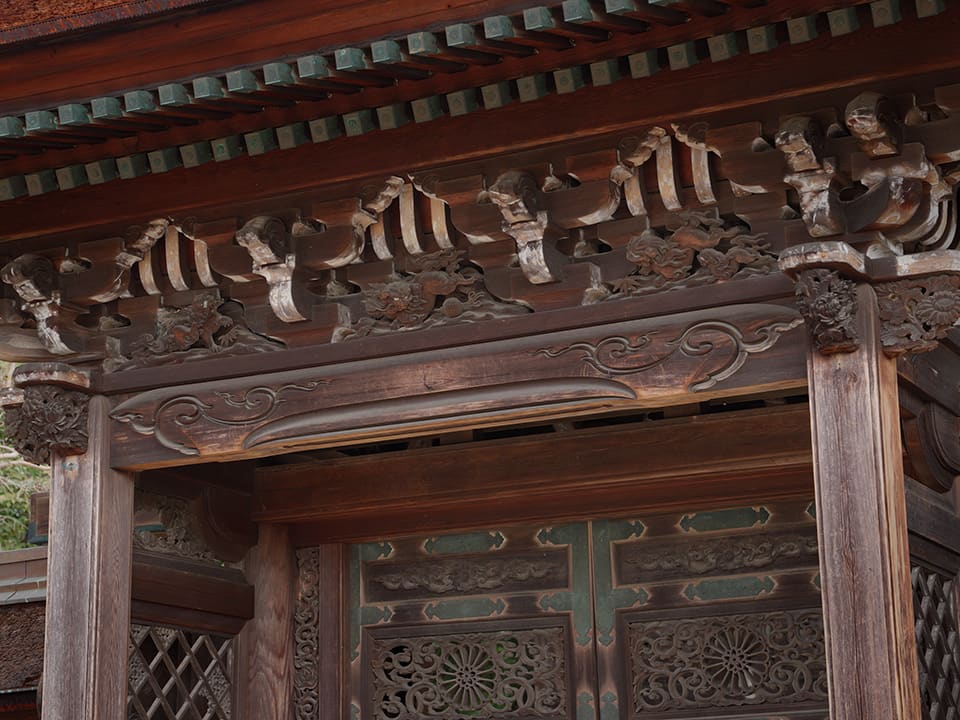
The mausoleum of Shinran Shōnin (1173–1263) is surrounded by a latticed fence. The fence has two gates: an ornate formal gate on the south side and a simple gate on the east side. Both the formal gate and the fence are roofed with Japanese cypress (hinoki). The gate has curved gables on both sides, with the entrance on the long, straight side. The gate entrance is about 1.5 meters wide and is shut with a set of double doors.
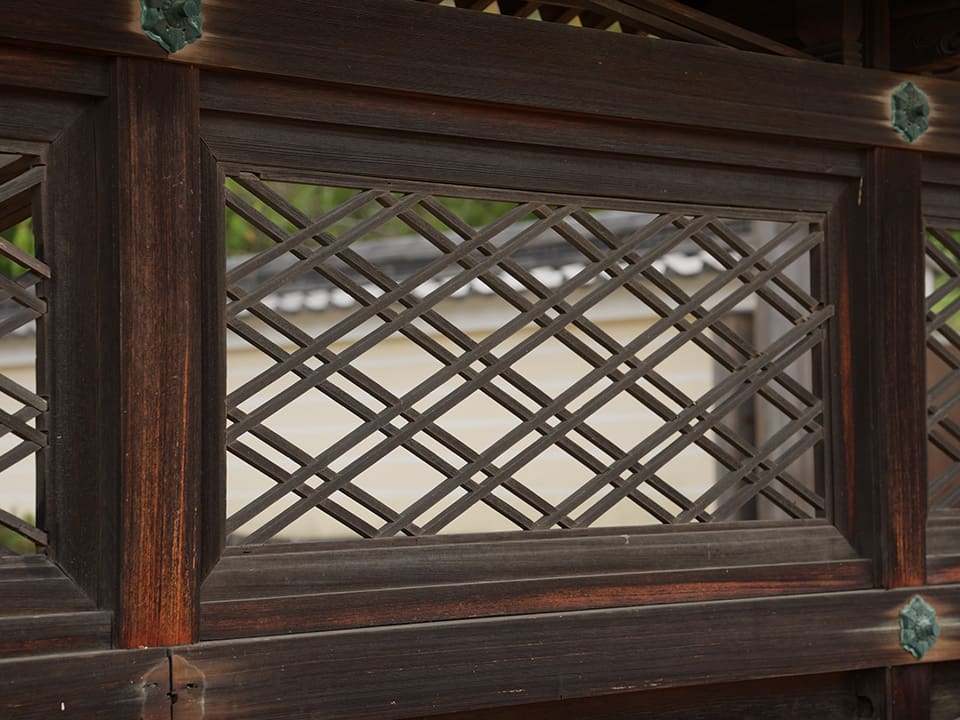
The fence is made up of 27 sections of wood latticework set between posts and covered with a pitched roof. This type of fence is called a mizugaki and is commonly used as the boundary marker enclosing the most sacred part of a temple or shrine. Along with the intricate latticework are inlaid carvings of narcissus, lotus flowers, horsetail, and dandelions. These carvings are based on the design of Yamamoto Baiitsu (1783–1856), a master of bird-and-flower painting (kachōga).
The formal gate on the south side of the enclosure opens onto the Haidō. Beyond the Haidō is a raised, rectangular burial mound where Shinran’s remains are buried. Surrounding the mound are the graves of the abbots of Senjuji. According to temple records, the mausoleum dates to 1672. The gate and the fence were built in 1858 and were most recently restored between 2010 and 2012.
Yamamoto Baiitsu
Yamamoto Baiitsu (1783–1856) was a scholar and painter active during the late Edo period (1603–1867). Born in Owari Province (now western Aichi Prefecture), he was known for his nanga paintings, which were characterized by simple yet elegant landscapes and scenes of flowers and birds represented in a poetic, even romantic style.
openwork fence
non-penetrating tie beams
Beams that connects the pillars horizontally. It is installed along the wall to be overlaid above the lintels or to span between the pillars.
Shinran Shōnin
Shinran Shōnin (1173–1263), also known as Kenshin, was the founder of the Jōdo Shinshū (True Pure Land) Buddhist sect. After undergoing ascetic training on Mt. Hiei, he studied senju nenbutsu, or the exclusive invocation of the name of the Buddha, under Hōnen (1133–1212). In 1207, he was exiled with other disciples of Hōnen by the imperial court, who feared Hōnen’s influence. Shinran performed missionary work in the Echigo and Kanto regions and expounded on faith in the buddha Amida in his magnum opus, the Kyōgyō Shinshō (Teaching, Practice, and Enlightenment). He preached salvation through faith and brought about reform to Japanese Buddhism.
Share on Social Media


Please respond to our questionnaire.
Estimated length: 30 seconds