Important Cultural Property
Gobyō Haidō
1859 (the end of the Edo Period)
Five-bay long structure
Four-Bay Transverse Span
Single Tier
hip-and-gable style (irimoya-zukuri)
Front is fitted with a triangular gable and eaves fitted with a cusped gable
Rear is fitted with a triangular gable
tiled roof (hongawarabuki)
This article can be read in about 2 minutes.
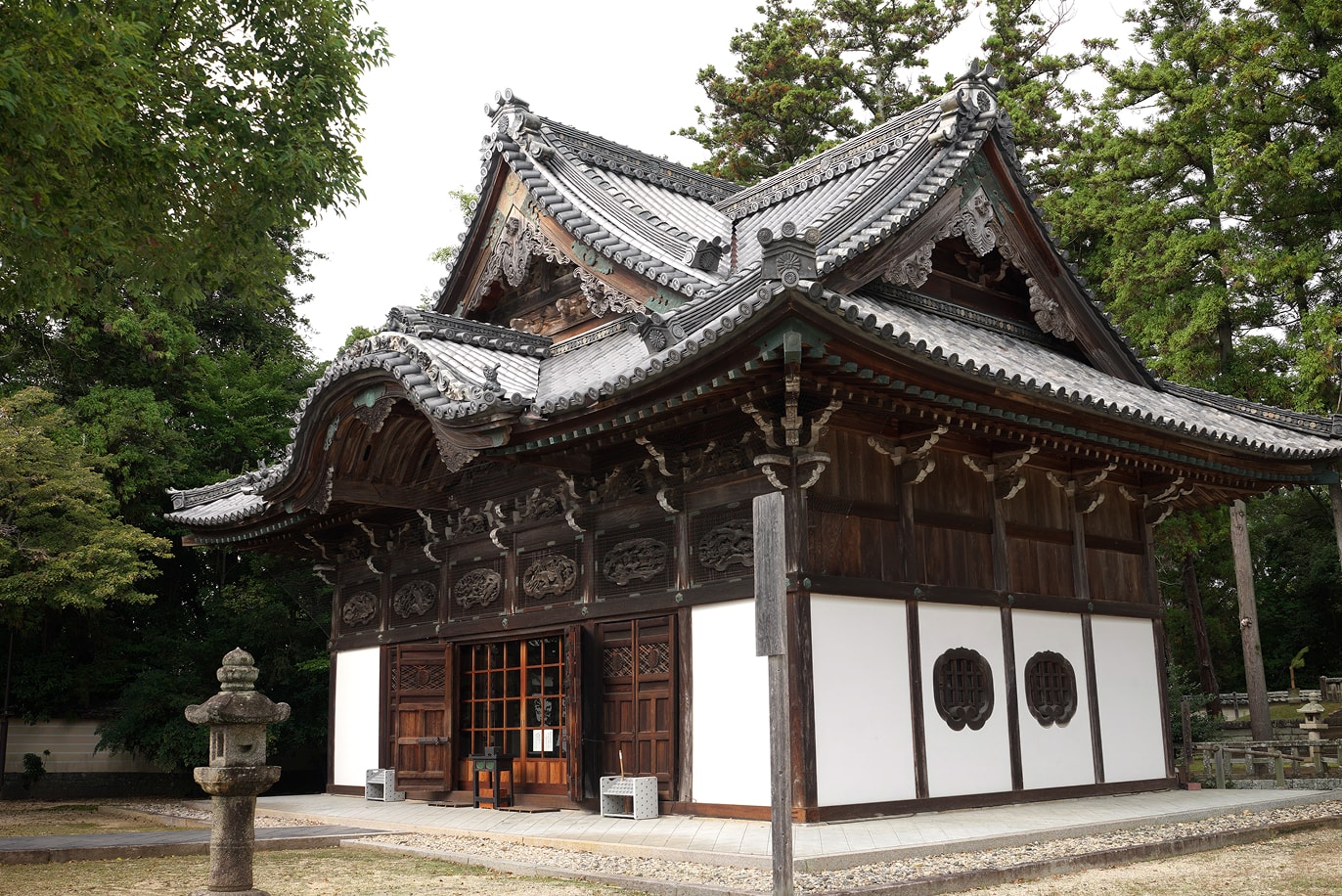
A quiet space
to remember the saint
The mausoleum of Shinran Shōnin (1173–1263) is located to the west of the Nyoraidō. Shinran was the founder of Jōdō Shinshū Buddhism. Shinran’s physical remains are interred across a number of Jōdō Shinshū temples in Japan—five of his teeth are interred at Senjuji.
The Gobyō Haidō is a hall within the grounds of the mausoleum and is used for memorial services. The small building has a large, ornate roof, and its exterior is lavishly decorated with elaborate carvings of birds and flowers. In contrast the interior is plain and unadorned.
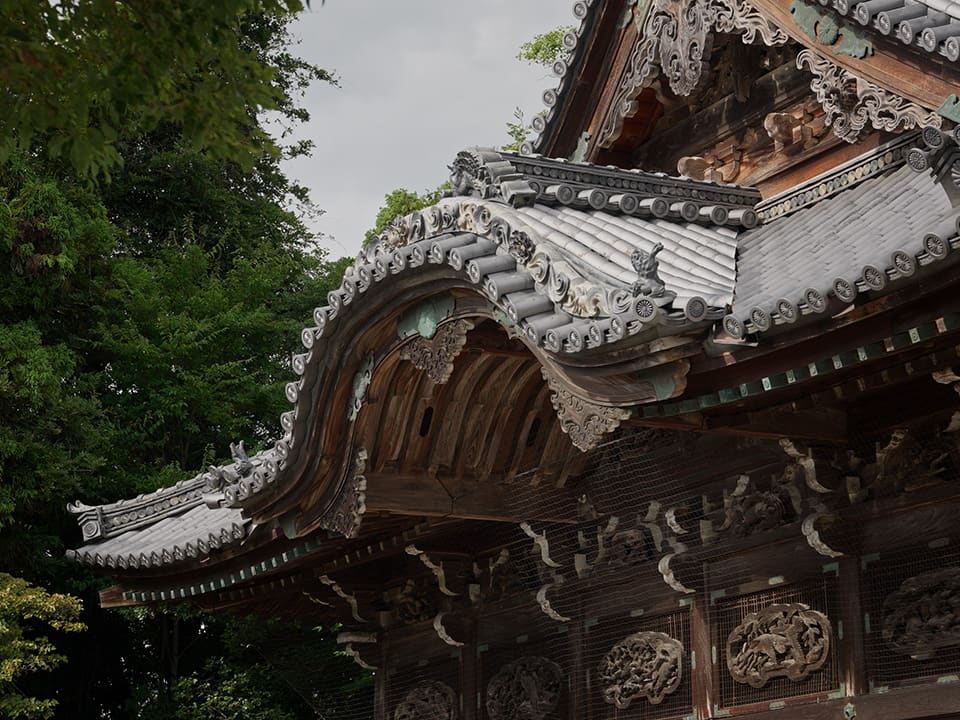
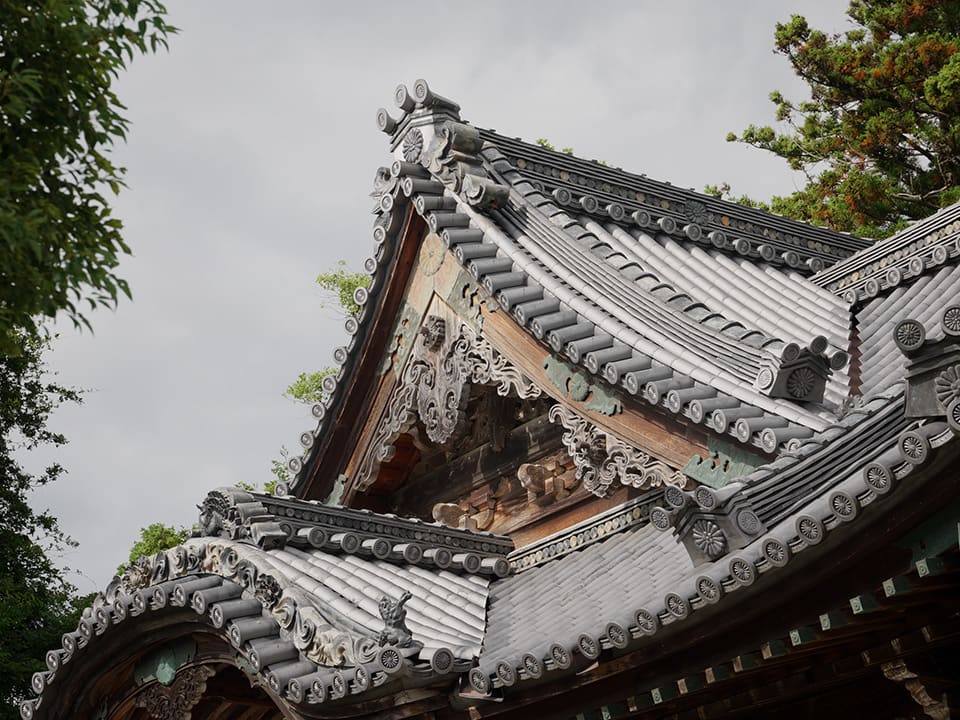
The roof has a curved gable (karahafu) over the entrance, and above that, as well as on the rear of the building, are steeply pointed triangular gables. Under all the gables are carvings of birds in pine trees and bamboo thickets, along with chrysanthemums, lotus flowers, and peonies. Chrysanthemums feature prominently in the roof tiles and metalwork. At the top of the karahafu is a metal sculpture of a peacock.
Shinran passed away on January 16, 1262, and the monks visit the Haidō on the sixteenth of every month as part of the memorial ceremony for Shinran.
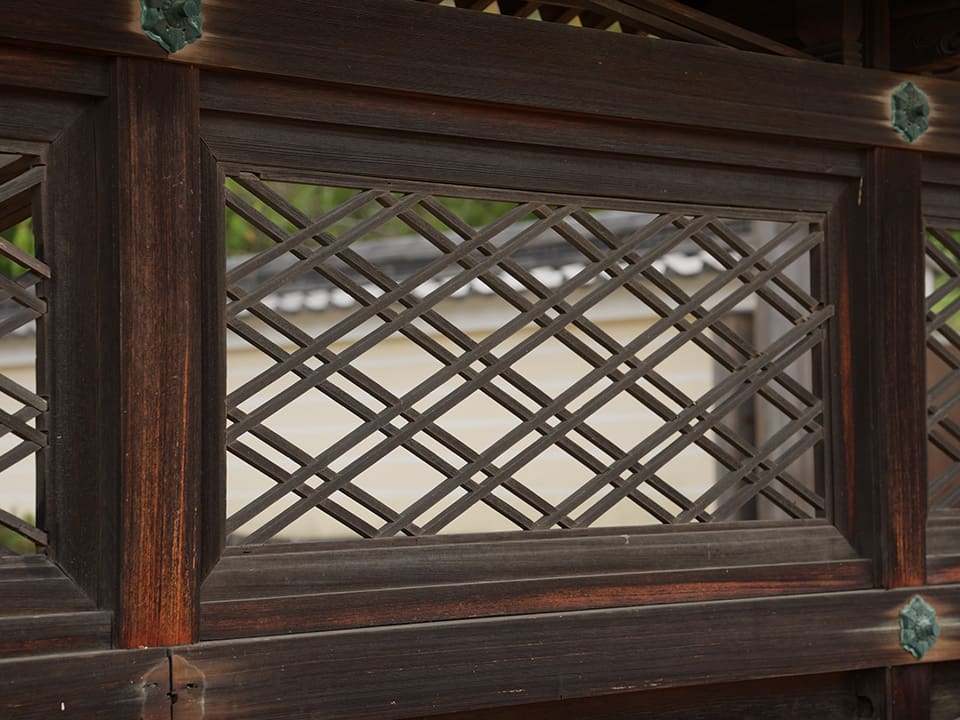
openwork fence
karahafu undulating bargeboard
A unique style of roof with a gable that flows from the top center with gentle curves on each side.
chidori gable
Shinran Shōnin
Shinran Shōnin (1173–1263), also known as Kenshin, was the founder of the Jōdo Shinshū (True Pure Land) Buddhist sect. After undergoing ascetic training on Mt. Hiei, he studied senju nenbutsu, or the exclusive invocation of the name of the Buddha, under Hōnen (1133–1212). In 1207, he was exiled with other disciples of Hōnen by the imperial court, who feared Hōnen’s influence. Shinran performed missionary work in the Echigo and Kanto regions and expounded on faith in the buddha Amida in his magnum opus, the Kyōgyō Shinshō (Teaching, Practice, and Enlightenment). He preached salvation through faith and brought about reform to Japanese Buddhism.
Share on Social Media


Please respond to our questionnaire.
Estimated length: 30 seconds