Important Cultural Property
Karamon Gate
1844 (the end of the Edo Period)
four-legged gate
gable (roof)
Front and back eaves fitted with cusped gables
cypress bark
This article can be read in about 2 minutes.
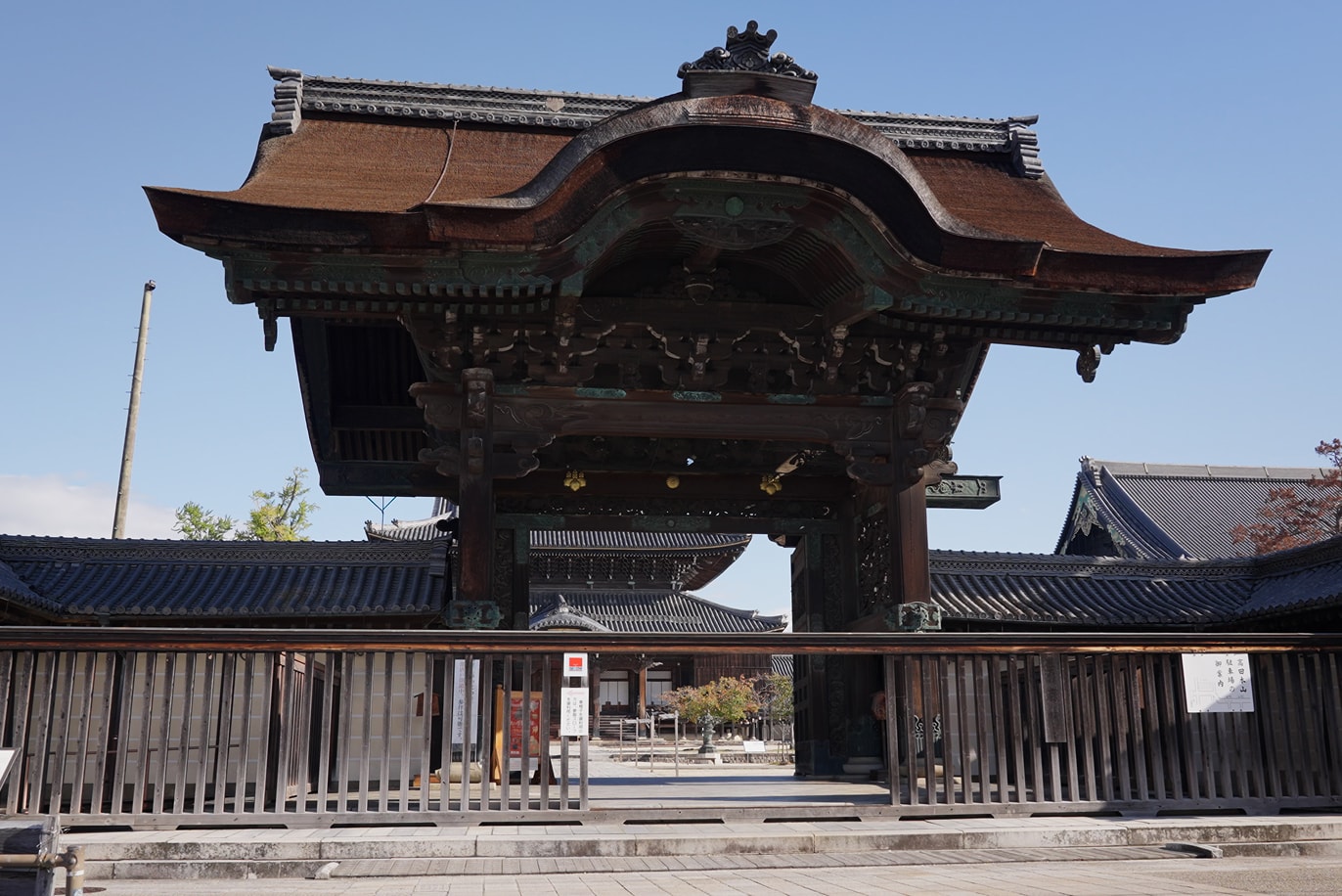
A gate vibrant
with dignity and splendor
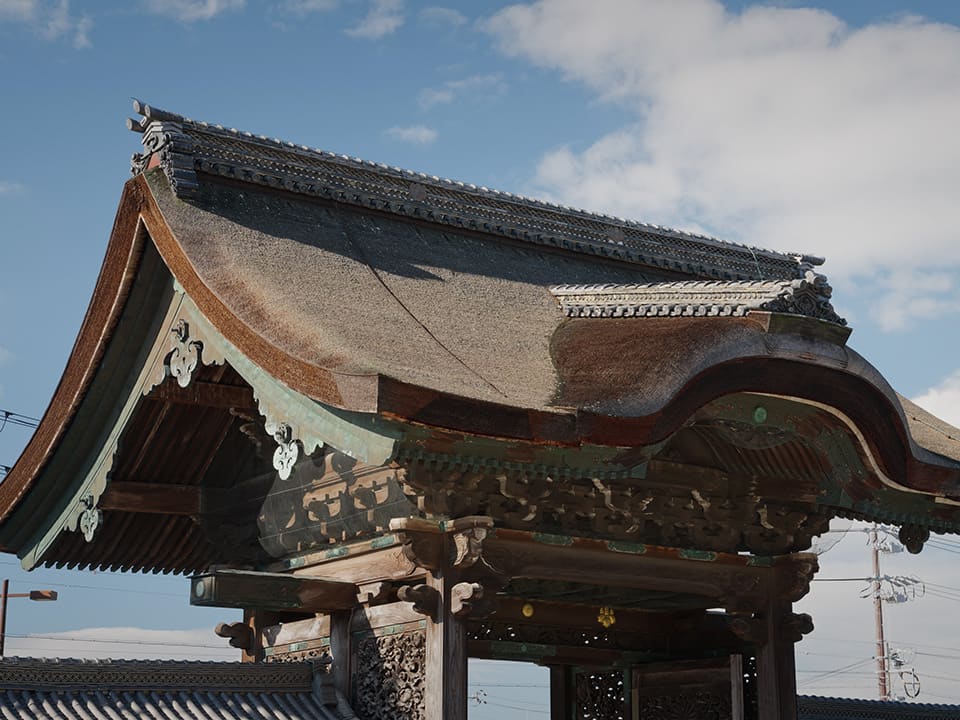
The Karamon Gate is directly opposite the Nyoraidō and matches the hall’s architectural style. Its name comes from the curved gables called karahafu on the front and rear sides of the gate. During the Edo period (1603–1867), karamon gates were generally reserved for the exclusive use of daimyo, imperial envoys, and other high-ranking individuals. Now this gate is open to the public.
Everything about Karamon Gate is meant to convey prestige. It is made entirely of carefully selected, high-quality zelkova wood. The roof is thatched with slats made of Japanese cypress, and intricate carvings fill almost every available surface.
The carvings depict animals, flowers, and figures from the Japanese classics. The most prominent carvings are Chinese lions at play among peonies. The lions have glass eyes, and the whites of their eyes is striking against the dark wood.
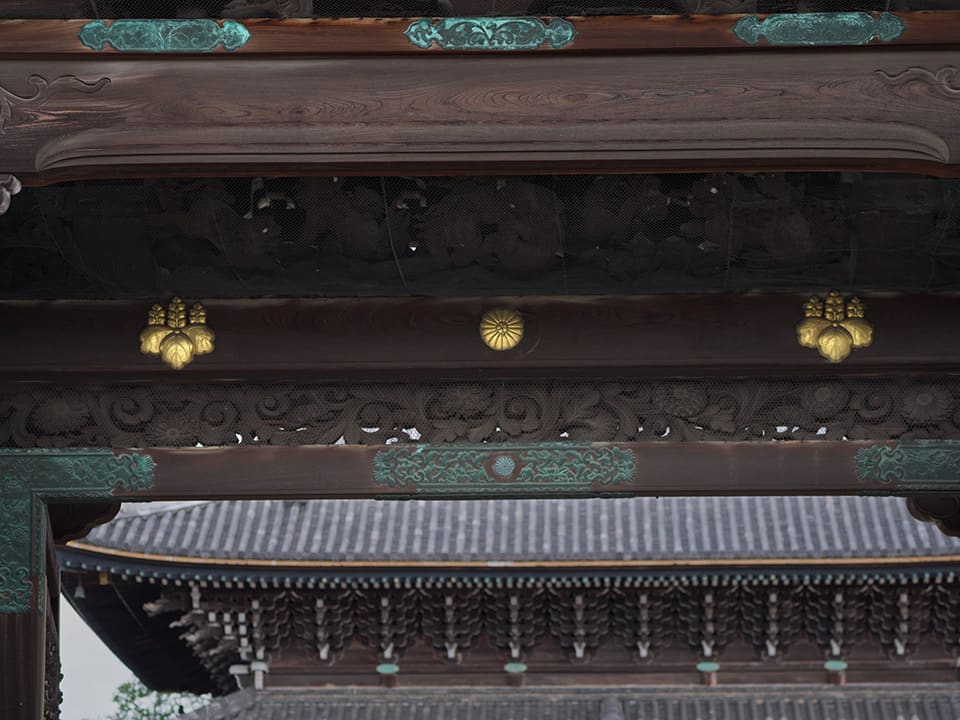
Chrysanthemums and trailing vines also feature prominently on the doors, transoms, and under the gables. Smaller figures in the gate include sumo wrestlers who appear to be holding up the roof.
It took 35 years to build the gate. The lumber was milled in 1809, groundwork began in 1820, and the ridge-raising ceremony was finally held in 1844. The gate was renovated in 2010.
monzeki
This was the name given to a temple whose head priest was a former member of the imperial family or a noble family. In some instances, the term could also refer to the priest himself. Temples with this designation sat at the top of the temple hierarchy.
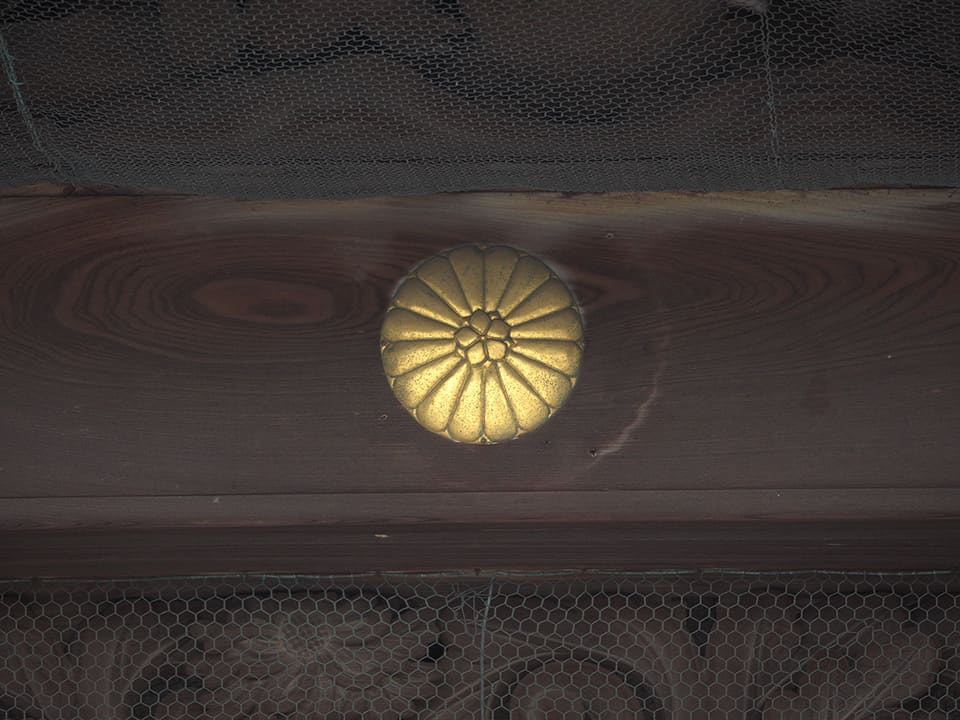
chrysanthemum crest
sumo wrestler carving
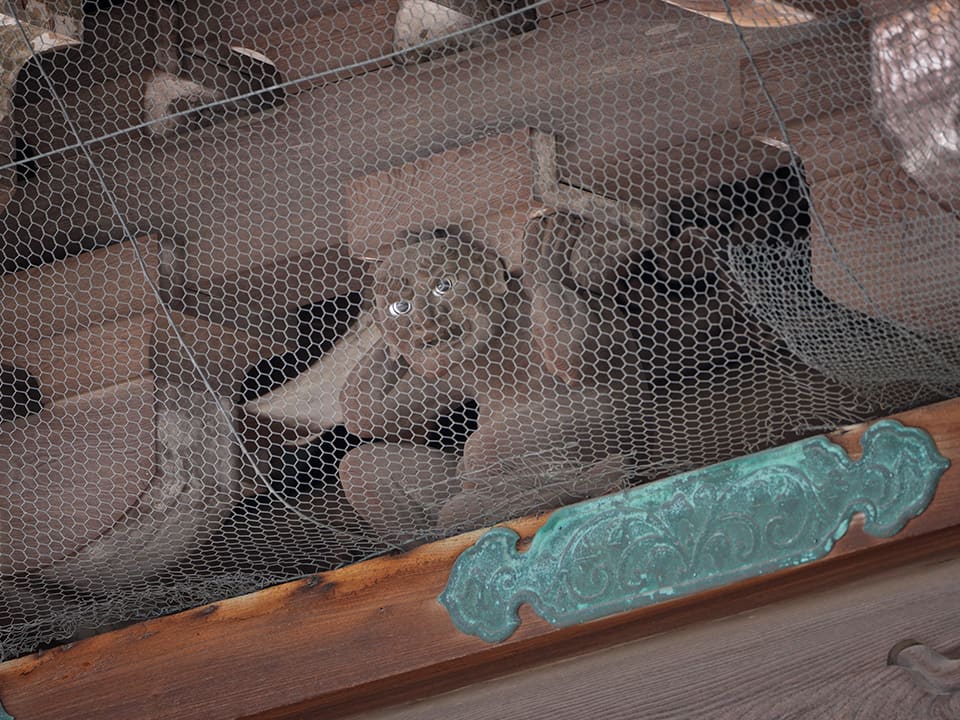
lion and cub
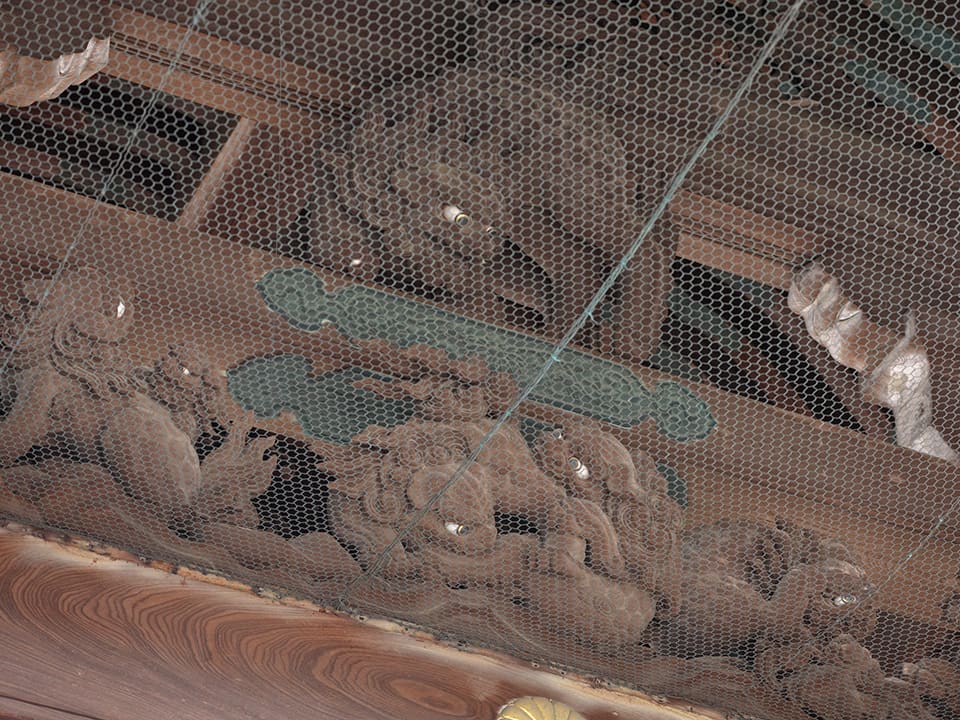
sukashibori openwork
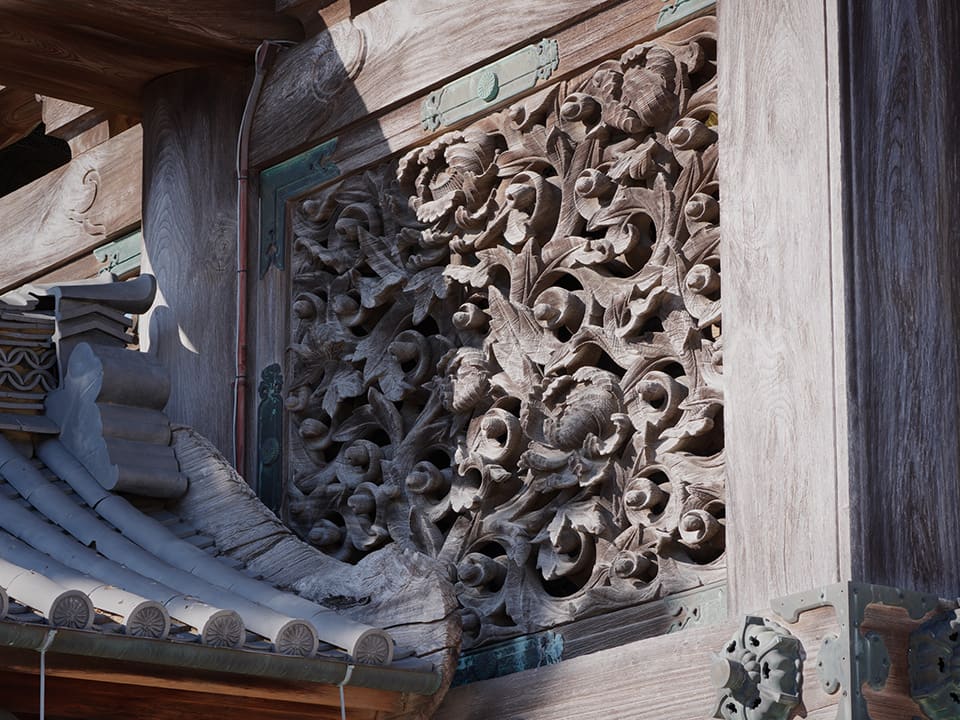
transom
A horizontally elongated opening set between the ceiling and the lintel or tie beams. Although it can be closed off with walls, doing so would reduce lighting and ventilation. Therefore, the space is left opened and adorned with intricate carvings and lattices.
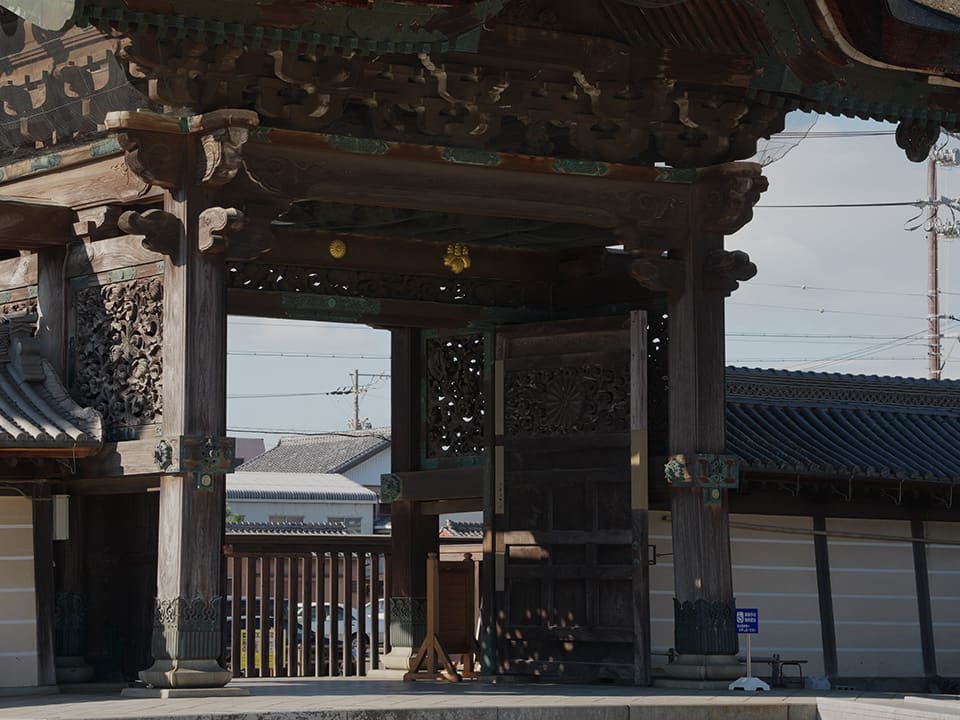
four-legged gate
With two main pillars at the center, four further posts are located to the front and the back of the gate. It is called yotsuashimon Gate, as yotsuashi means four legs (posts) and the gate has four shore posts. This type of gate is commonly used as the front gate of a temple. Normally cylindrical main posts and slightly thinner prism shore posts are used with a gable roof. A gate with four shore posts on each side, in total eight posts, is called a hakkyakumon gate (gate with eight legs/posts).
cypress bark
A unique Japanese roofing method that involves laying Japanese cypress bark and fastening it with bamboo nails. This technique is durable and results in a beautiful finish.
Share on Social Media


Please respond to our questionnaire.
Estimated length: 30 seconds