Important Cultural Property
Kyōgyōshinshō (Takada Copy)
Kamakura period
6 volumes
Ink on paper
Height: 28.0 cm; Width: 21.5 cm
This article can be read in about 2 minutes.
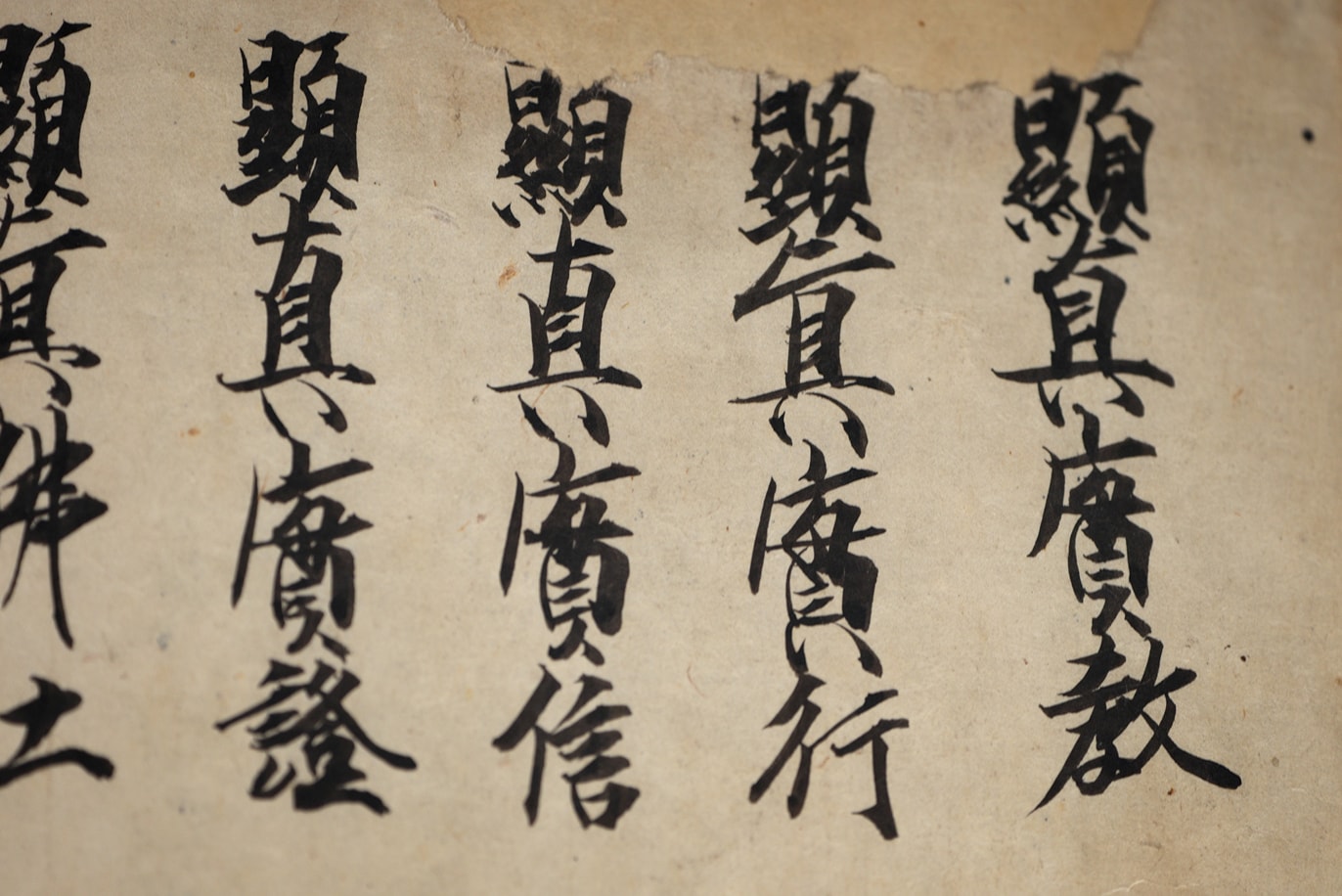
Faith and reverent devotion
residing in the brushwork
The True Teaching, Practice, and Realization of the Pure Land Way (Kenjōdo shinjitsu kyōgyōshō monrui) is a six-volume work by Shinran (1173–1263) and a fundamental text of Jōdo Shinshū Buddhism. Often abbreviated as Kyōgyōshinshō, it systematically presents the doctrines of the faith across six sections: Doctrine, Practice, Faith, Evidence, True Buddha Land, and Manifest Buddha Land.
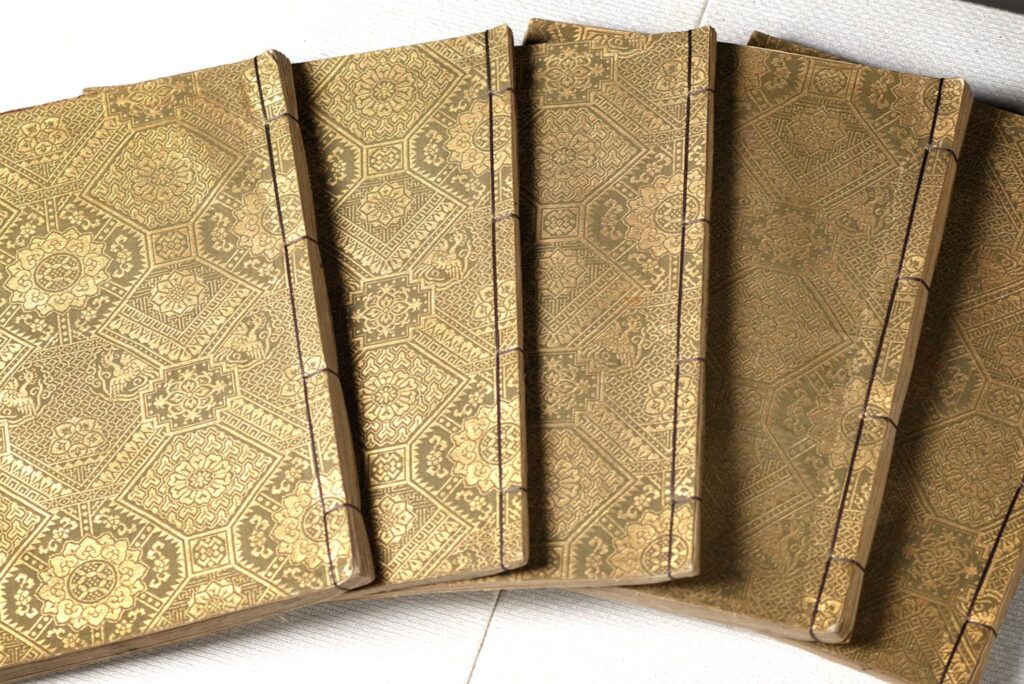
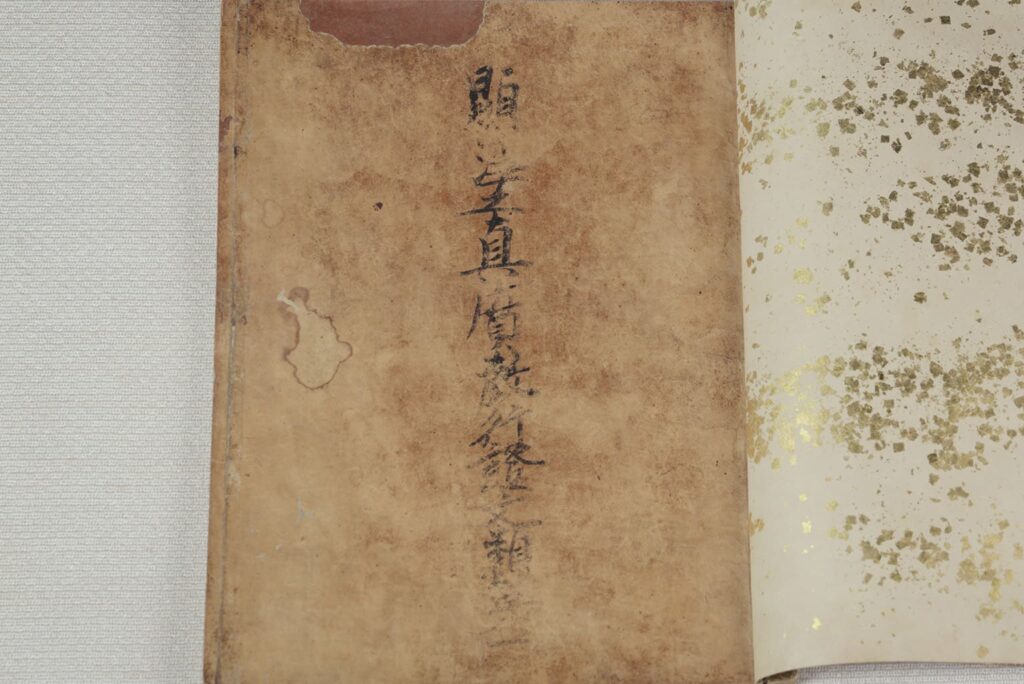
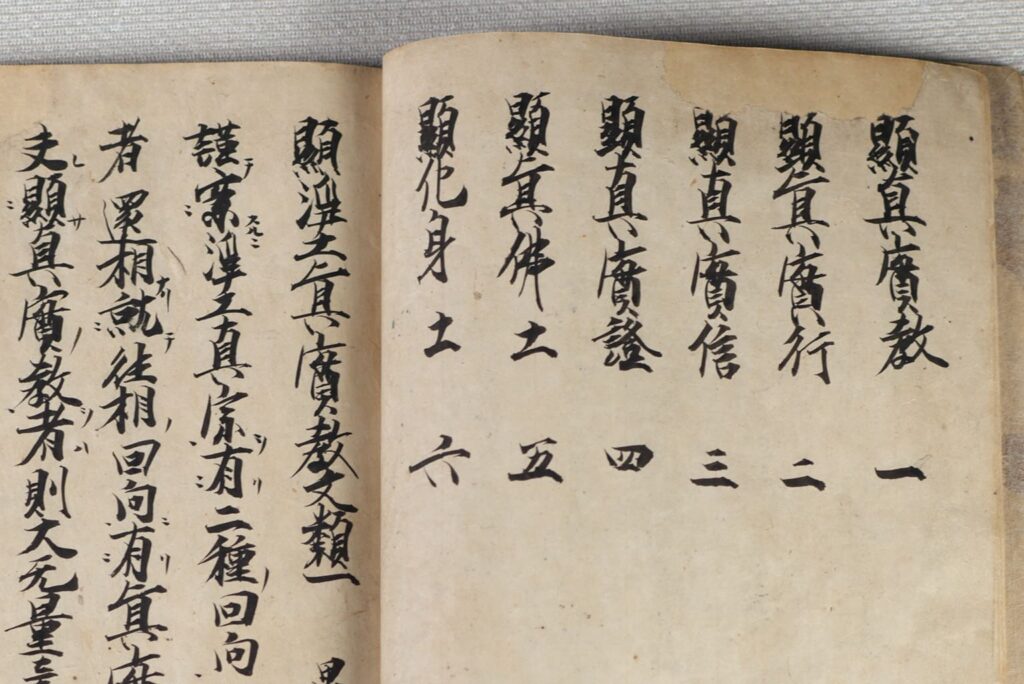
A copy was transcribed under the supervision of Shinran in Kyoto by Senshinbō (dates unknown), a disciple of Shinbutsu (1209–1258), the second head priest of the Takada school. Upon completion, it was returned to his master, Shinbutsu, who produced a clean copy for preservation, which is the copy now in Senjuji Temple’s possession.
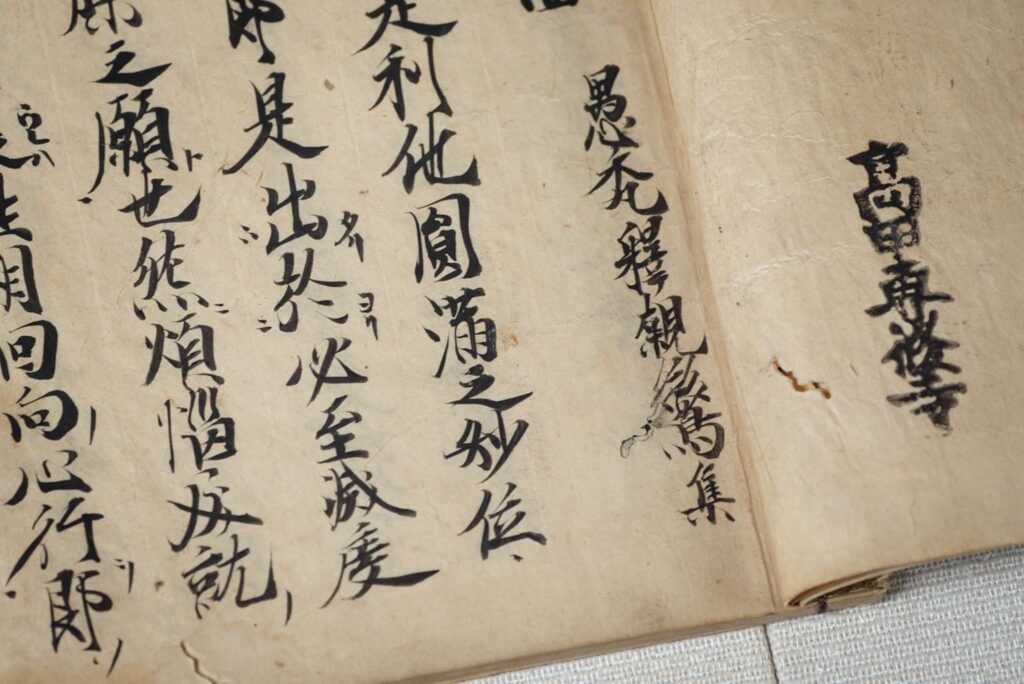
Although Shinbutsu imitated Shinran's calligraphy style in writing this copy, his personal style shines through. At the end of the first, third, and fifth books are additional inscriptions on Shinran's death, including the information that Kenchi (1226–1310) and Senshinbō participated in his burial. These later notes are written in a different hand than that of the main text and are believed to have been added by Sengū (1292–1343), the fourth head of the Takada school.
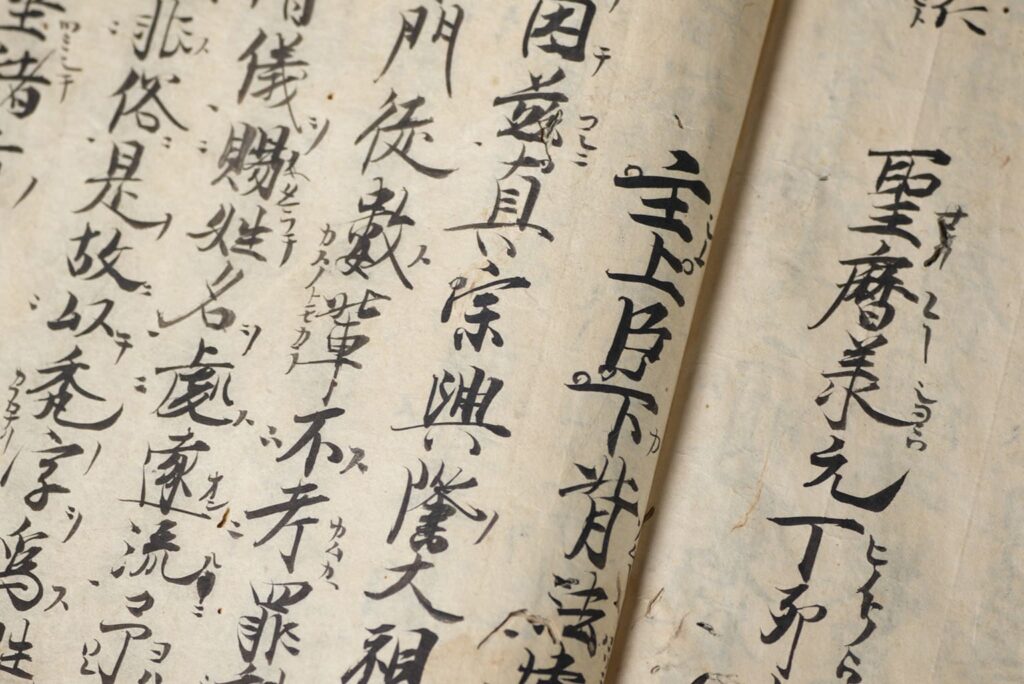
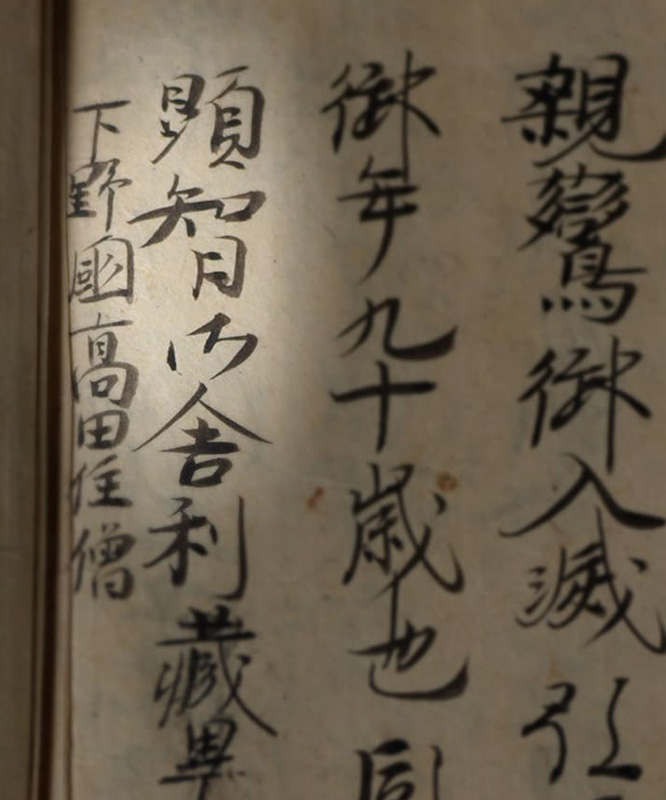
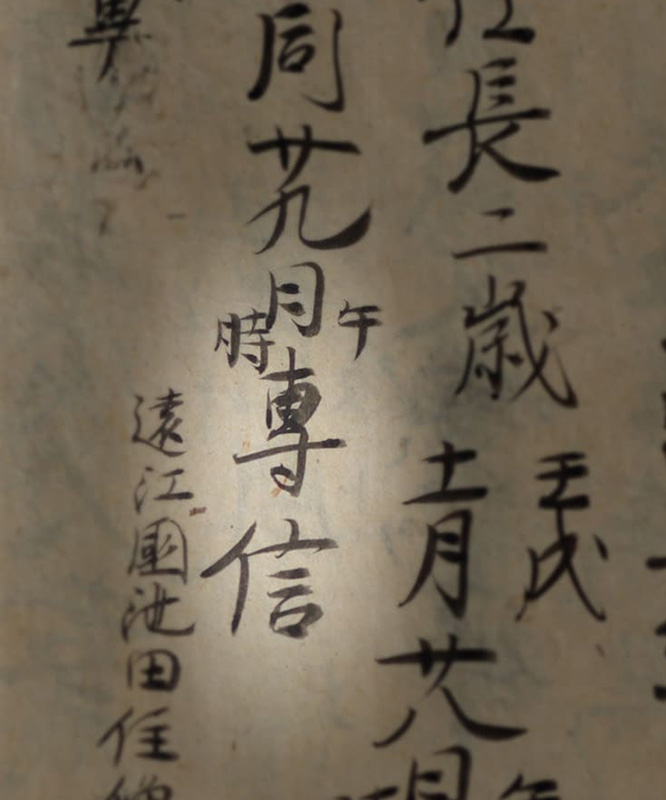
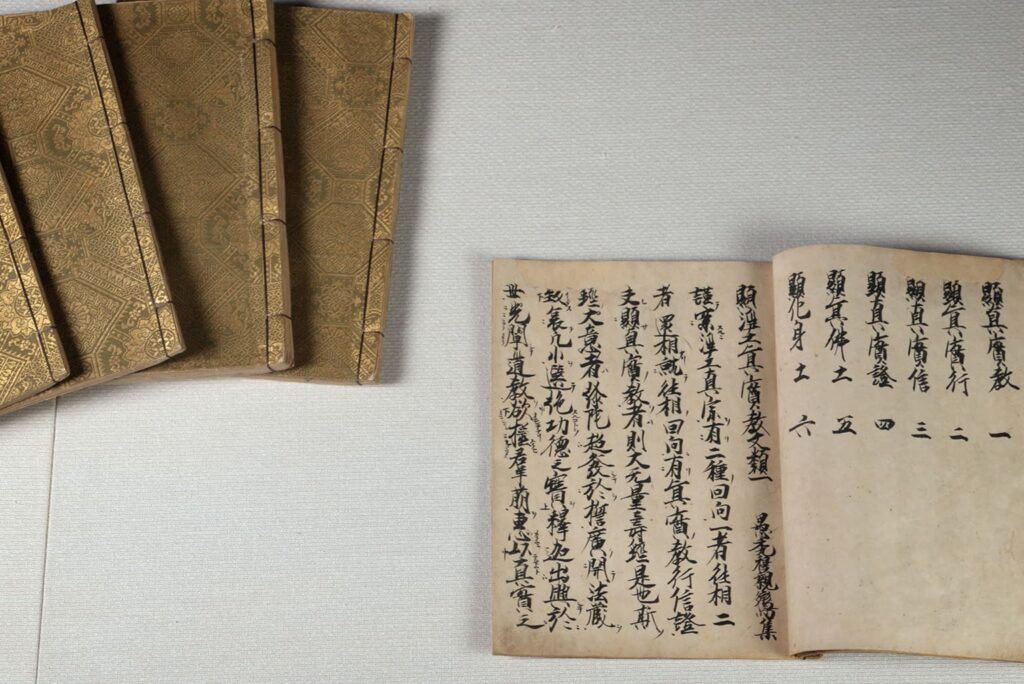
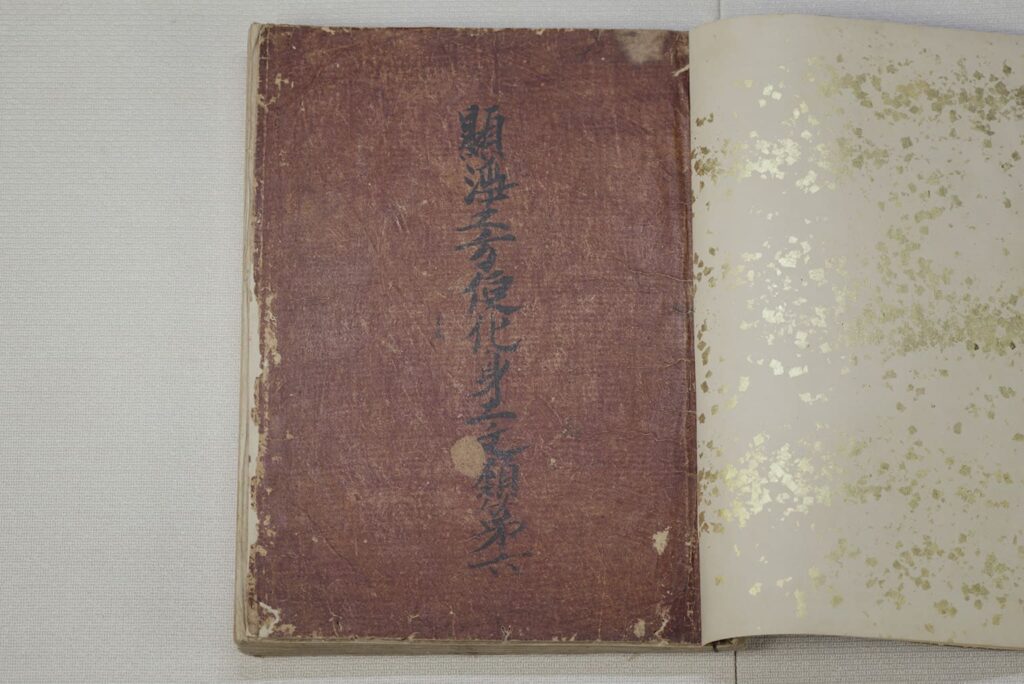
The pages in the book made by Shinbutsu are made of high-quality paper called kozo kohi-gami, and the cover is made from sturdy shibubiki-gami paper.
Sengu Shōnin
Sengu (1292–1343) was the fourth head priest of Senjuji Temple, the head temple of the Jōdo Shinshū Takada school. He was called the “Saint of Ouchi” and was a high-ranking priest who supported the religious community through such acts as rebuilding the Ōtani Mausoleum and penning a number of literary works.
shibubiki-gami paper
A durable and waterproof paper made by applying persimmon juice to traditional Japanese washi paper.
Senshinbō
Senshinbō (dates unknown) was a disciple of Shinbutsu Shōnin (1209–1258), the second head priest of Senjuji Temple. He worked with his master to spread Shinran’s teachings and help strengthen the religious community.
Teaching, Practice, and Enlightenment (Kenjōdo shinjitsu kyōgyōshō monrui)
This is Shinran Shōnin’s (1173–1263) magnum opus. It is a collection of holy scriptures that form the foundation of Jōdo Shinshū Buddhism. The work is commonly abbreviated as the Kyōgyō shinshō. Centered on teaching, practice, faith, and enlightenment, it systematically preaches salvation through the vow of Amida Buddha.
Jōdo Shinshū (True Pure Land Buddhism)
This is the Jōdo (Pure Land) Buddhist sect founded by Shinran Shōnin (1173–1263). It preaches salvation through the power of Amida Buddha. It is built on the tenet of salvation through faith, promises rebirth in the paradise realm of the Pure Land, and considers the invocation of the name of Amida (nenbutsu) an act of reverence.
Kenchi Shōnin
Kenchi (1226–1310) was the third head priest of Senjuji Temple, the head temple of the Jōdo Shinshū Takada school. He carried on the religious tradition of Shinbutsu Shōnin (1209–1258), a disciple of Shinran (1173–1263). He performed missionary work in eastern Japan, organized religious lectures, and was involved in the construction of Kyoto’s Ōtani Mausoleum, the resting place of Shinran.
Shinbutsu Shōnin
Shinbutsu (1209–1258) was the second head priest of Senjuji Temple, the head temple of the Jōdo Shinshū Takada school. He was a direct disciple of Shinran Shōnin (1173–1263) and inherited the sacred teachings of his master. Shinbutsu solidified the foundation of the sect’s doctrine and strengthened the Takada school’s presence in the Kanto region.
Shinran Shōnin
Shinran Shōnin (1173–1263), also known as Kenshin, was the founder of the Jōdo Shinshū (True Pure Land) Buddhist sect. After undergoing ascetic training on Mt. Hiei, he studied senju nenbutsu, or the exclusive invocation of the name of the Buddha, under Hōnen (1133–1212). In 1207, he was exiled with other disciples of Hōnen by the imperial court, who feared Hōnen’s influence. Shinran performed missionary work in the Echigo and Kanto regions and expounded on faith in the buddha Amida in his magnum opus, the Kyōgyō Shinshō (Teaching, Practice, and Enlightenment). He preached salvation through faith and brought about reform to Japanese Buddhism.
MOVIE
Experience the video to get one step closer.
This video, accompanied by narration, introduces the charms of Kyōgyōshinshō (Takada Copy). Experience its charms even more deeply through the video.
Duration: (audio included)
Share on Social Media


Please respond to our questionnaire.
Estimated length: 30 seconds