Important Cultural Property
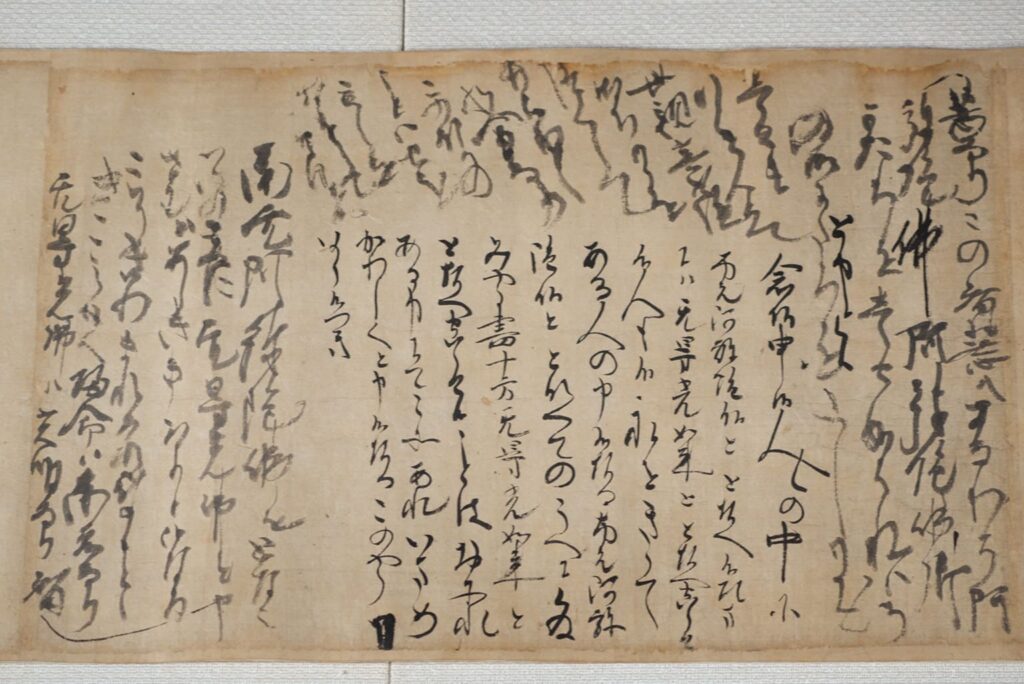
Correspondence of Shinran
Kamakura period
10 scrolls
Ink on paper
This article can be read in about 2 minutes.
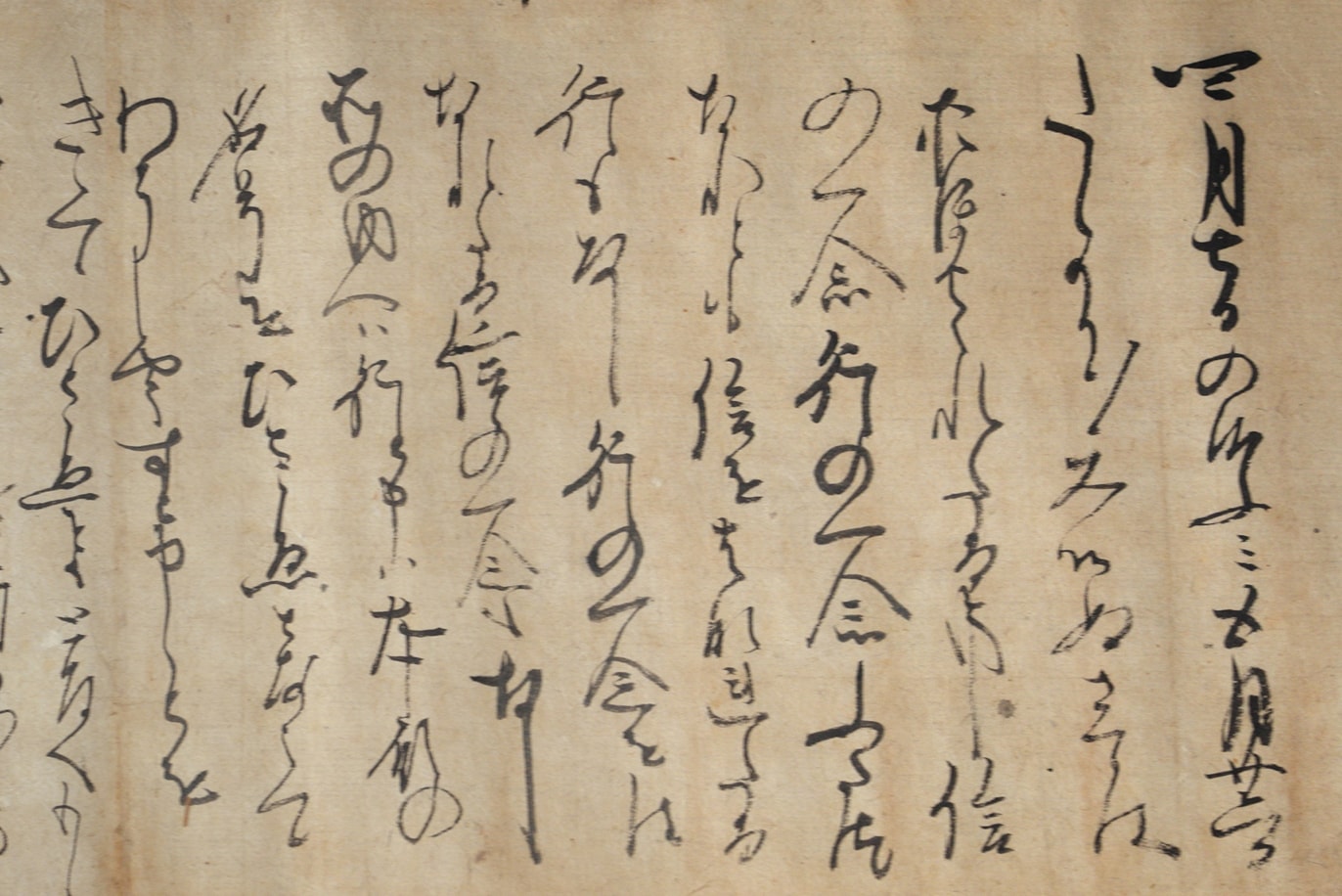
The saint’s words
written to his disciples
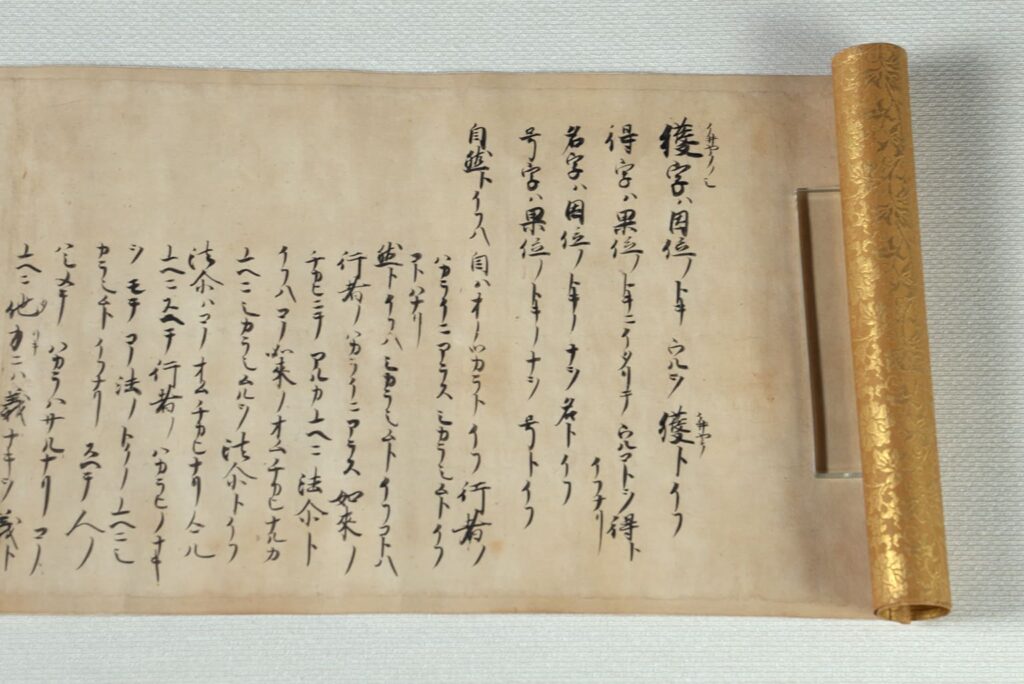
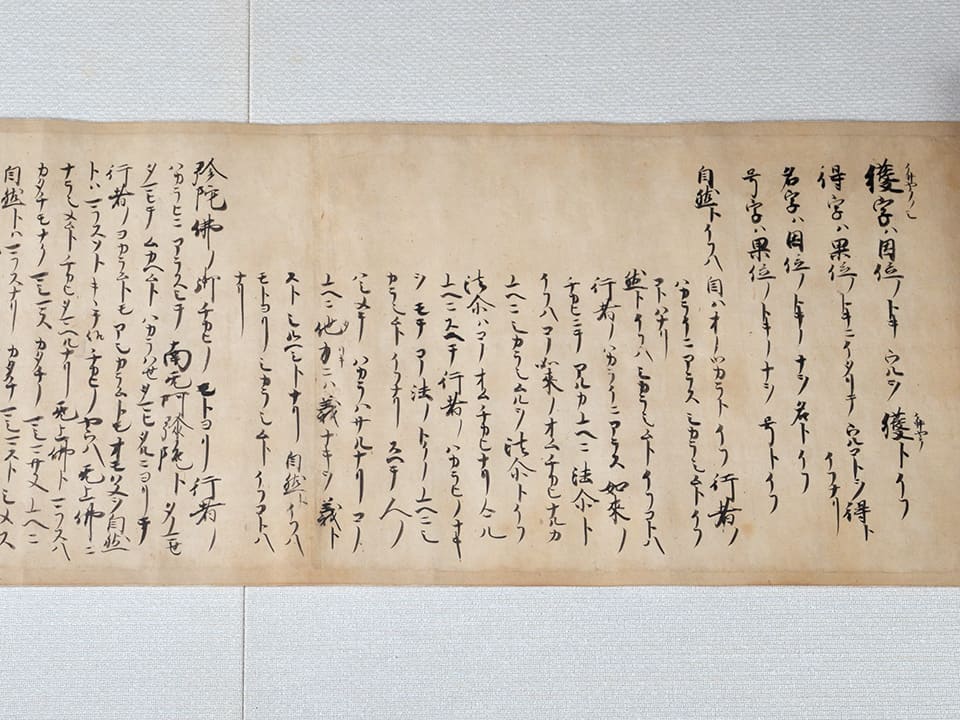
This book contains a collection of letters from the monk Shinran (1173–1263) to his disciples. Ten letters from the collection are preserved at Senjuji Temple, seven of which are in Shinran’s own handwriting. It also includes a copy of his work Gyakutoku myōgō jinen hōni gosho addressed to his disciple Kenchi (1226–1310), along with two additional manuscripts.

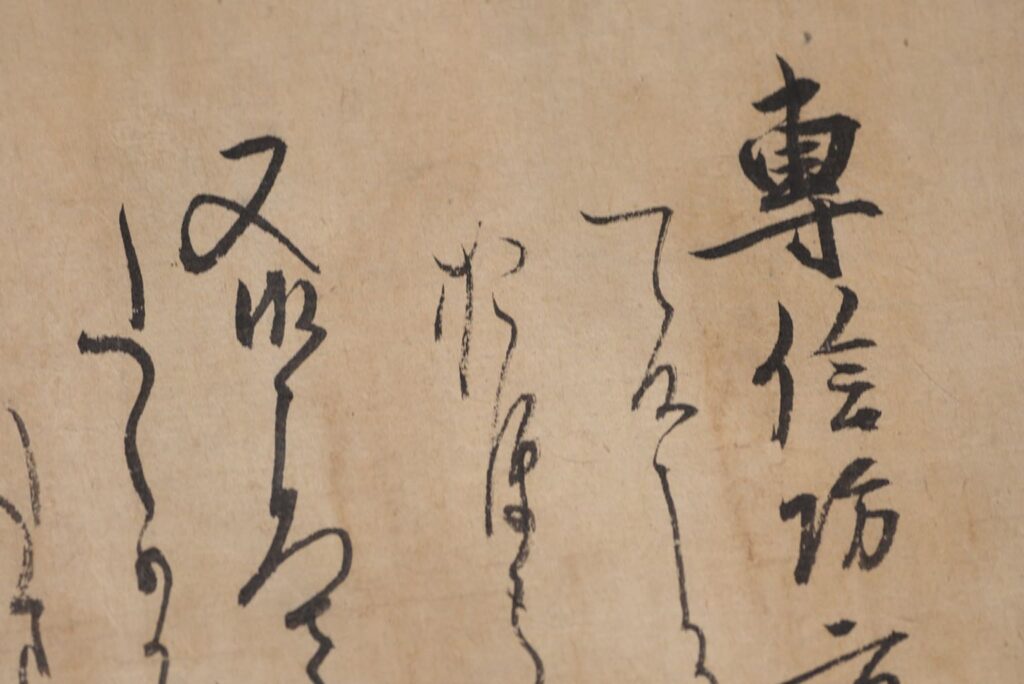
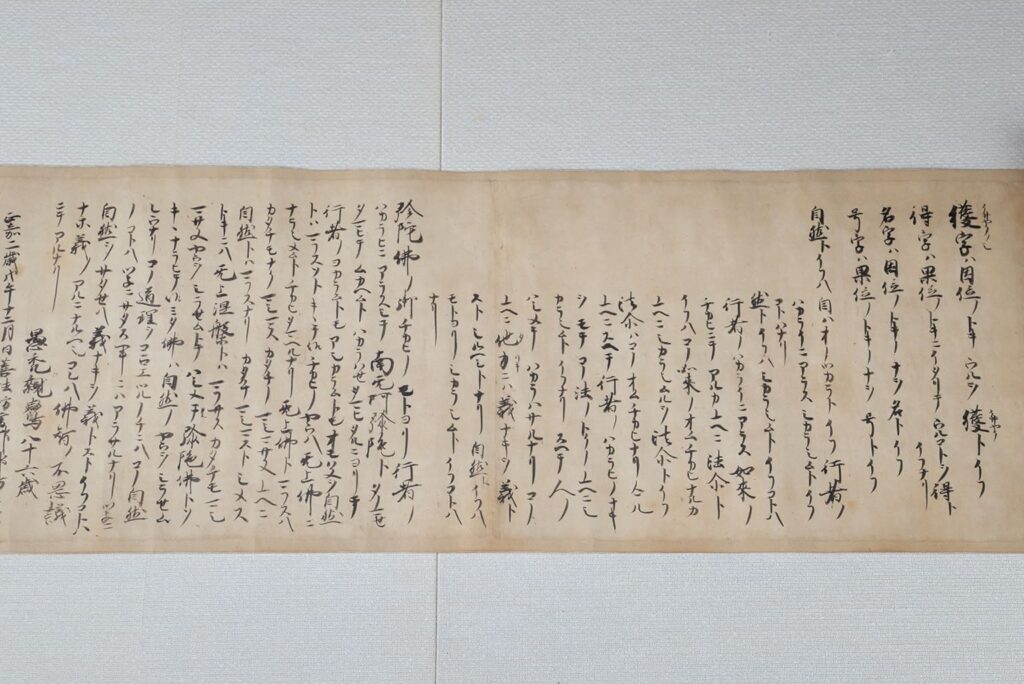
These letters were primarily exchanged between Shinran, who was living in seclusion in Kyoto, and his disciples in the Kanto region. Many are his responses to questions concerning Buddhist doctrine. Though written in the form of private letters, their content was regarded as official doctrine of the Jōdo Shinshū sect and circulated among disciples to be copied. Certain letters, such as “Jinen Hōni,” reveal Shinran’s own doctrinal thoughts, making them extremely valuable as sources for research in religious history and Buddhist philosophy.
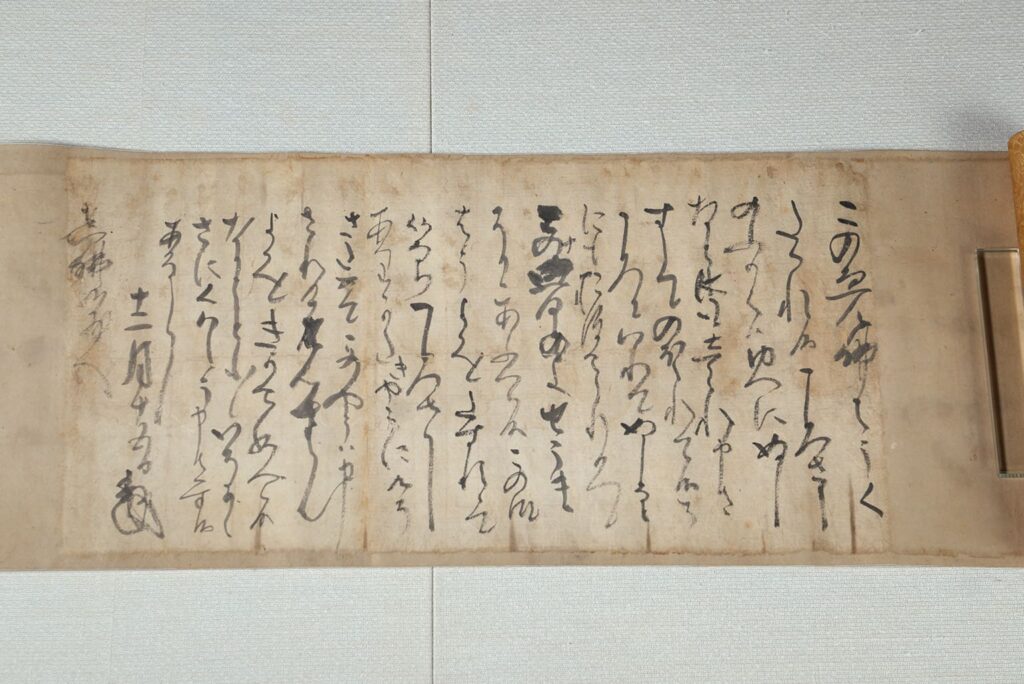
natural order
This is the core concept of Jōdo Shinshū as preached by Shinran Shōnin (1173–1263). This idea encourages one to “let things occur naturally according to Buddhist law.” This means separating oneself from the artificial and entrusting oneself to the salvational powers of Amida Buddha.
Shinshū doctrine
This refers to the system of teachings from the Jōdo Shinshū Buddhist sect, which was founded by Shinran Shōnin (1173–1263).
Kanto
A geographic region in Japan. It refers to the plains in the eastern part of Honshu and the surrounding area.
manuscript
Refers here to books or documents that have been manually reproduced.
Kenchi Shōnin
Kenchi (1226–1310) was the third head priest of Senjuji Temple, the head temple of the Jōdo Shinshū Takada school. He carried on the religious tradition of Shinbutsu Shōnin (1209–1258), a disciple of Shinran (1173–1263). He performed missionary work in eastern Japan, organized religious lectures, and was involved in the construction of Kyoto’s Ōtani Mausoleum, the resting place of Shinran.
Shinran Shōnin
Shinran Shōnin (1173–1263), also known as Kenshin, was the founder of the Jōdo Shinshū (True Pure Land) Buddhist sect. After undergoing ascetic training on Mt. Hiei, he studied senju nenbutsu, or the exclusive invocation of the name of the Buddha, under Hōnen (1133–1212). In 1207, he was exiled with other disciples of Hōnen by the imperial court, who feared Hōnen’s influence. Shinran performed missionary work in the Echigo and Kanto regions and expounded on faith in the buddha Amida in his magnum opus, the Kyōgyō Shinshō (Teaching, Practice, and Enlightenment). He preached salvation through faith and brought about reform to Japanese Buddhism.
MOVIE
Experience the video to get one step closer.
This video, accompanied by narration, introduces the charms of Correspondence of Shinran. Experience its charms even more deeply through the video.
Duration: (audio included)
Share on Social Media


Please respond to our questionnaire.
Estimated length: 30 seconds