Important Cultural Property
Ōgenkan
1751-1829 (the end of the Edo Period)
Length: 32.1 m
Width: 10.9 m
Single Tier
hip-and-gable style (irimoya-zukuri)
sangawara roof tile
With a main front entrance
hip-and-gable style (irimoya-zukuri)
Eaves fitted with a cusped gable
tiled roof (hongawarabuki)
This article can be read in about 2 minutes.
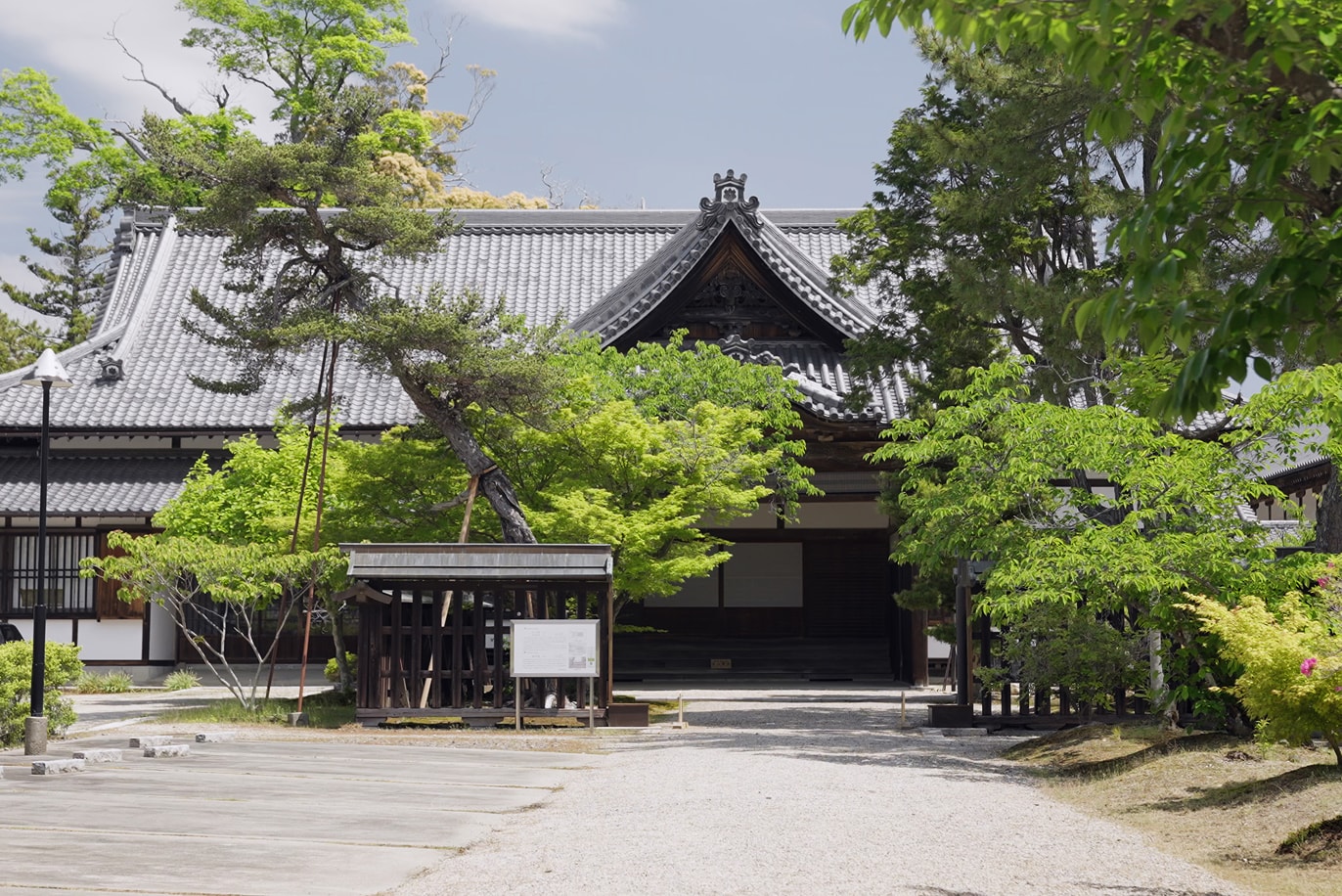
Space with a dignified, refined presence
This building is used for receiving high-ranking visitors to the temple. The large, curved gable over the entrance indicates the prestige of the building and that the entrance is used for special guests.
The Ōgenkan and Otaimensho burned down in 1783, and the Ōgenkan was rebuilt in 1790. At the time it was located east of the Otaimensho and faced east. In 1878, it was moved to its present location, west of the Otaimensho, and reoriented so that it faces south. It is directly in front of the Shishunkan, and the move is thought to have some connection with the preparations for the visit of the Meiji Emperor (1852–1912) in 1880.
Emperor Meiji
Emperor Meiji (1852–1912) was the 122nd emperor of Japan and reigned from 1867 to 1912. Spurring rapid modernization with the Meiji Restoration, he became a symbol of modern Japan. He promoted systemic reforms such as promulgating the Japanese Constitution of 1889 and establishing the Imperial Diet.
Share on Social Media


Please respond to our questionnaire.
Estimated length: 30 seconds