National Treasure
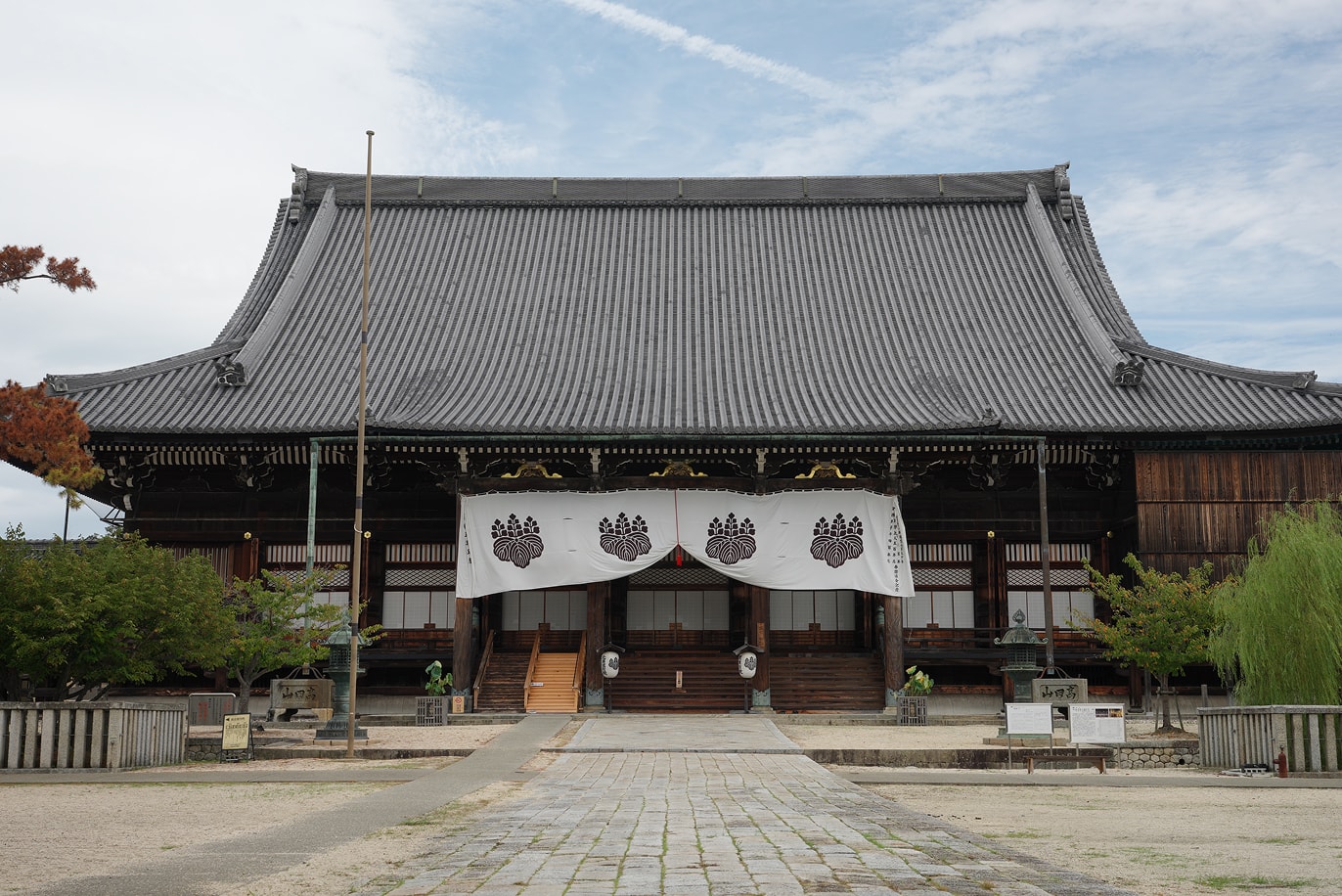
Mieidō
1666 (the middle of the Edo Period)
Nine-bay long structure
Nine-bay transverse span
Single Tier
hip-and-gable style (irimoya-zukuri)
Projection under the eaves on the rear side
Three-bay pent roof
Projection on the east side
One-bay long structure
One-Bay Transverse Span
hip-and-gable style (irimoya-zukuri)
tsumairi entrance
tiled roof (hongawarabuki)
This article can be read in about 2 minutes.
Meet Saint Shinran
in a journey through time
A mieidō is a hall built to house the image of a temple’s founder. At Senjuji Temple, the Mieidō enshrines a wooden statue of Shinran Shōnin (1173–1263), the founder of both Jōdō Shinshū Buddhism and Senjuji. Portraits of later abbots hang on either side of Shinran’s statue.
The Mieidō is designed to represent Jōdō Shinshū cosmology through its architecture. Just inside the entrance, the hall is plain and unadorned, but the back wall is covered with gold leaf and brightly colored paintings. The inner altar is also covered in gold leaf and represents Gokuraku—the Pure Land of Amida Nyorai, who is the Buddha of Infinite Light and Life. Flowers are believed to fall from the sky in the Pure Land, and the panels of the coffered ceiling are painted with chrysanthemums.
The plaque on the transom above the altar reads kenshin, a Buddhist term meaning “to discover truth through wisdom.” It is also the first half of Shinran’s posthumous name, Kenshin Daishi. The transoms are covered in geometric designs painted blue, green, and red. Carvings of birds and red and white peonies grace each section of the upper transom, and the lower transoms are decorated with carvings of enormous peonies covered in gold leaf. Lotus plants and flowers are a recurring motif on the walls of the hall and symbolize a person’s potential to enter the Pure Land. Just as the lotus plant rises from muddy waters, so too can people rise towards the Pure Land from the defilement of the mundane world.
The original Mieidō was completed in the 1400s, but it was destroyed in a fire in 1645. Reconstruction began in 1666 and was completed in 1679, making the Mieidō the oldest building at Senjuji. The original hall faced south, but during the 1600s most Jōdō Shinshū temples were built facing the east, to better represent the location of the Pure Land in the west. There was significant discussion regarding whether to change the orientation of the hall, but in the end, the Mieidō was rebuilt facing south. Practical reasons—like the fact that a pilgrimage road to Ise runs along the southern border of the temple, and that the temple’s lanterns and candles would be blown out by the strong northeastern winds of spring and summer—won out.
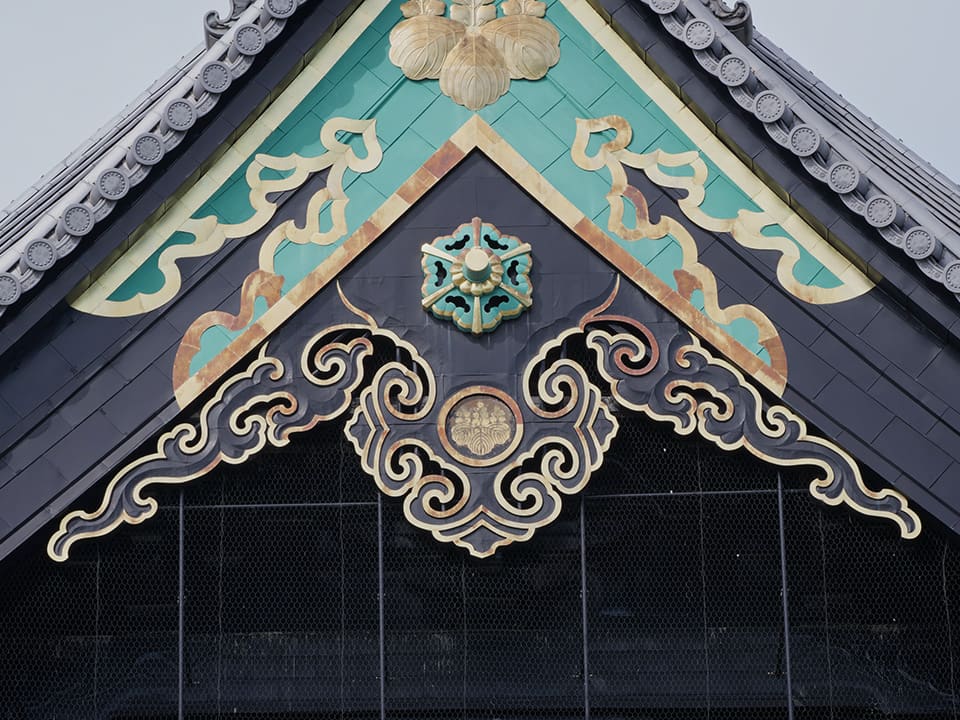
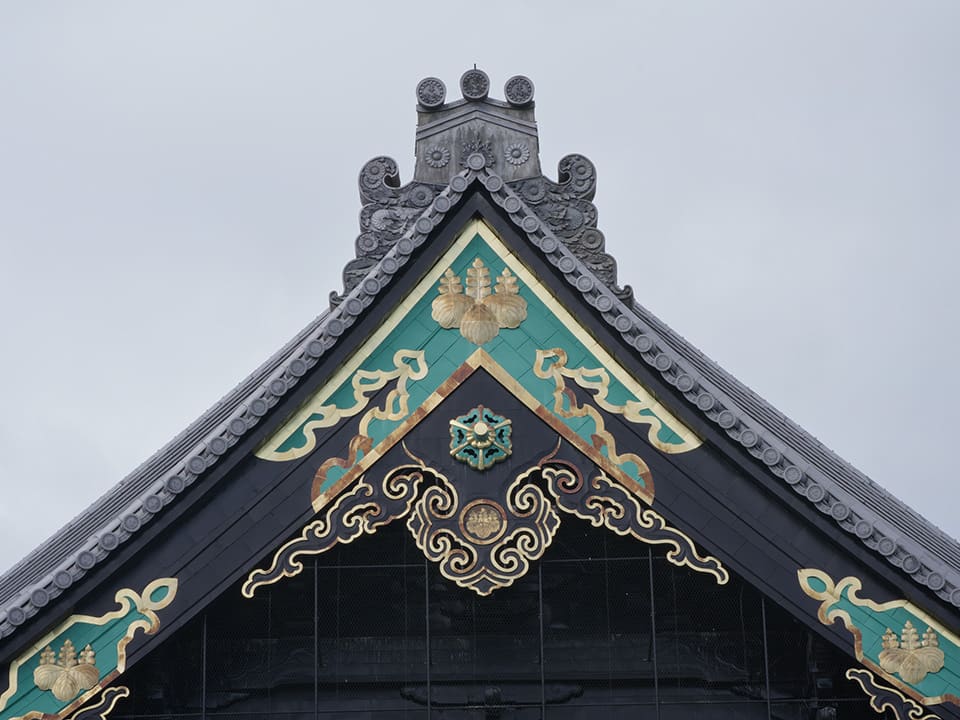
Many of the carpenters and craftsmen that built the new Mieidō were employed by the Tokugawa shogunate. Most were based in the Kantō region, and many had worked on the halls at Nikkō in Tochigi Prefecture. The Mieidō is built in a traditional Japanese style, and has a tall, hip-and-gable roof with detailed carvings decorating the space under the gables.
The Mieidō is the largest building at Senjuji, covering over 1,400 square meters or 780 tatami mats. It was designed as a hall for large gatherings and is still used for sermons and other services. Services are held in the Mieidō daily at 7 a.m..
Tokugawa (Edo) Shogunate
This was the military government founded by Tokugawa Ieyasu (1543–1616) in 1603. The Tokugawa shogunate governed Japan for over 260 years and established the feudal system of domains known as han. The regime fell in 1867.
arched beams (kouryou)
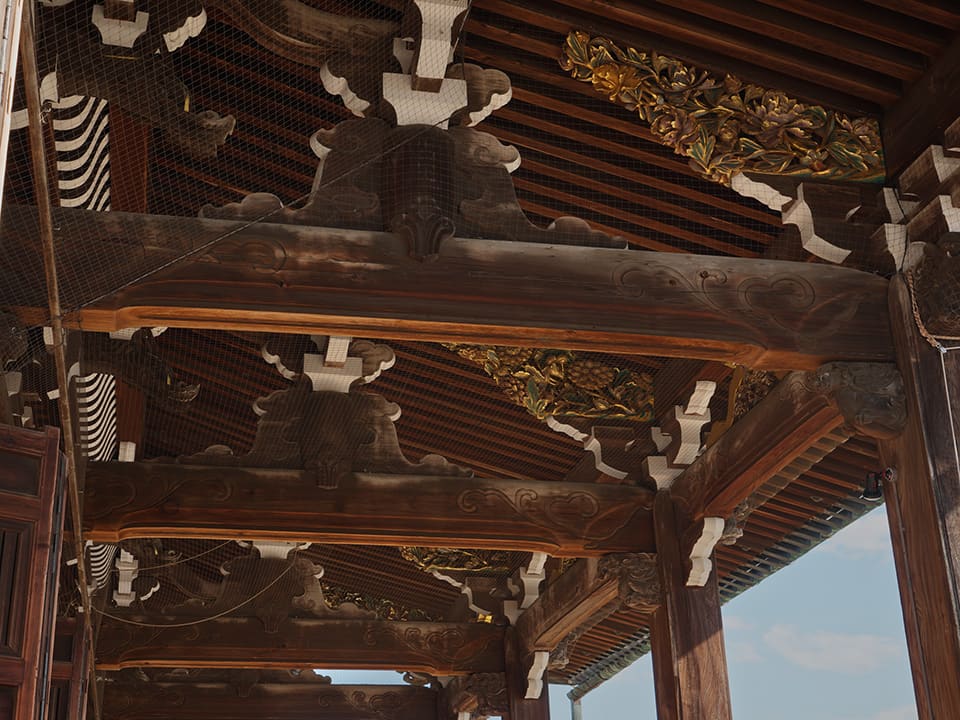
pent roof
In shrine and temple architecture, a structure with a roof that protrudes over the front steps. It allows the priest and worshippers to conduct ceremonies or pay respects from the front of the hall.
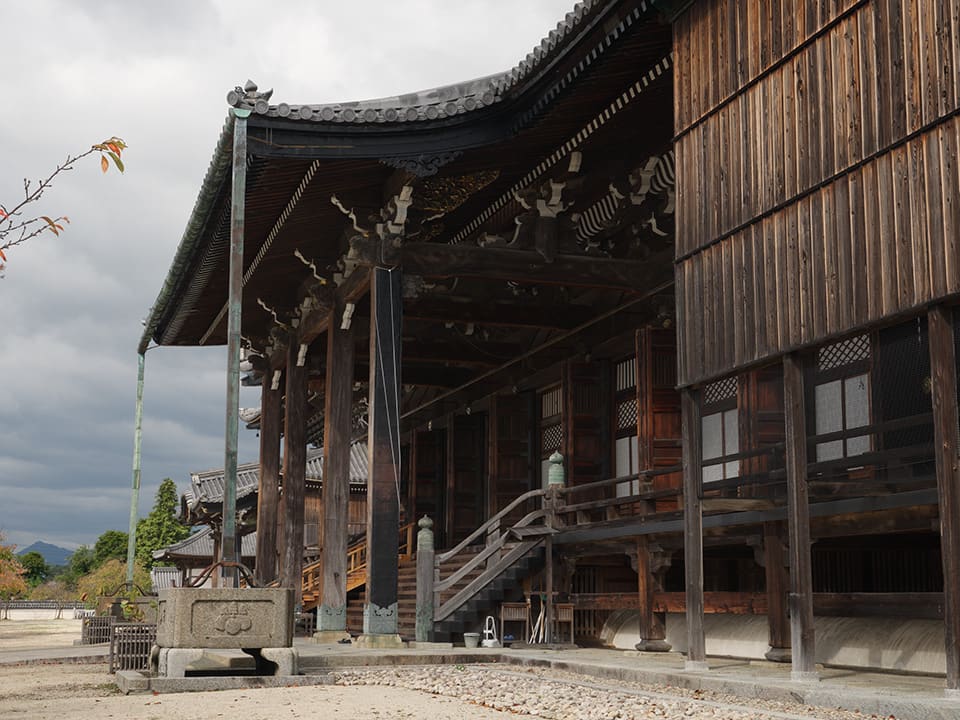
moya main building
The moya, or omoya, is the central section of a building, specifically the main space of the interior section of a building.
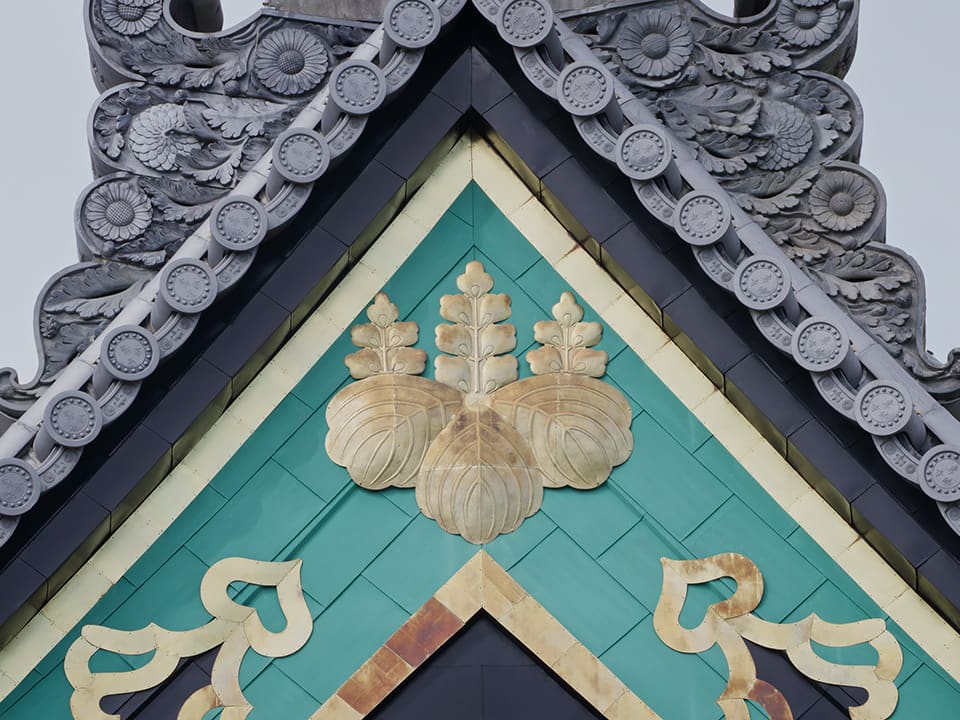
5-7 paulownia crest
This is a traditional crest in which paulownia tree flowers are arranged in a pattern with seven flower petals in the center and five to the left and right. This crest has symbolized nobility and authority since ancient times, and it has been used by the imperial family, Toyotomi Hideyoshi (1537–1598), and other powerful figures throughout Japanese history.
kegyo decorative pendant
arched beams (kouryou)
These are ornamental crossbeams that connect columns in a building. Characterized by an arched shape, they enhance the architectural design of temple and shrine buildings.
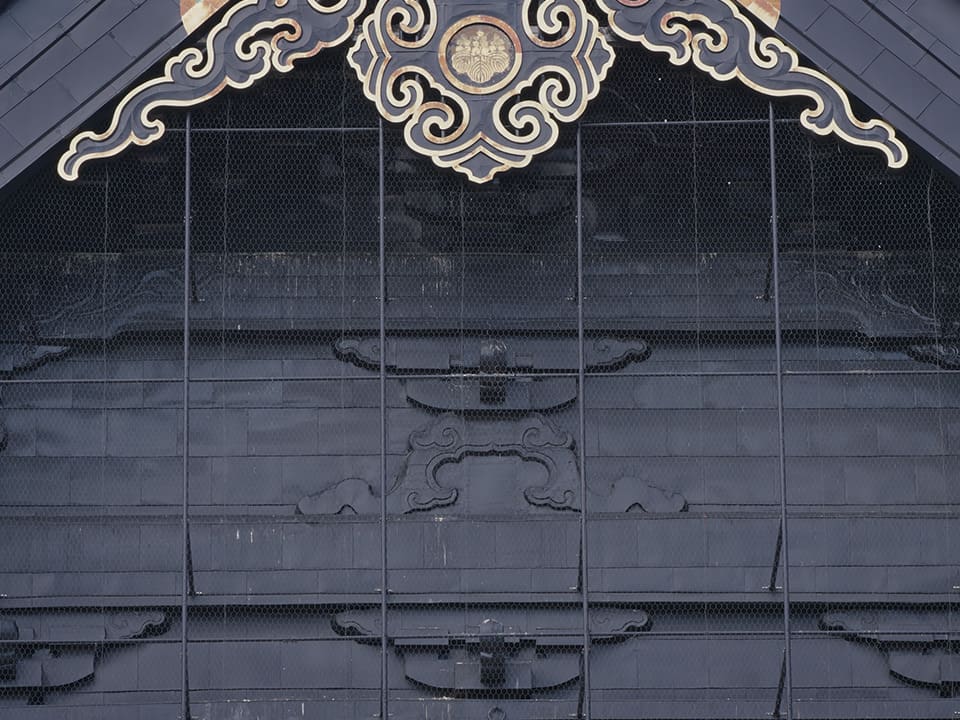
tsuma-kazari gable ornament
Shinran Shōnin
Shinran Shōnin (1173–1263), also known as Kenshin, was the founder of the Jōdo Shinshū (True Pure Land) Buddhist sect. After undergoing ascetic training on Mt. Hiei, he studied senju nenbutsu, or the exclusive invocation of the name of the Buddha, under Hōnen (1133–1212). In 1207, he was exiled with other disciples of Hōnen by the imperial court, who feared Hōnen’s influence. Shinran performed missionary work in the Echigo and Kanto regions and expounded on faith in the buddha Amida in his magnum opus, the Kyōgyō Shinshō (Teaching, Practice, and Enlightenment). He preached salvation through faith and brought about reform to Japanese Buddhism.
Share on Social Media


Please respond to our questionnaire.
Estimated length: 30 seconds